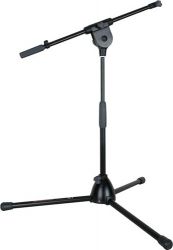
Mic stands

Microphone Stands from the Event-Technology Specialist: Microphone stands are the unsung heroes of every live show, studio session and stage production — and at LTT, your specialist for event technology, you get the professional models that keep your microphones exactly where you need them. Whether you are miking a lead vocalist on a club stage, capturing a bass drum near the floor or recording a podcast at your desk, the right microphone stand delivers rock-solid stability and precise positioning. From...
Read more »
Mic stands
Close window
Mic stands

Microphone Stands from the Event-Technology Specialist

Microphone stands are the unsung heroes of every live show, studio session and stage production — and at LTT, your specialist for event technology, you get the professional models that keep your microphones exactly where you need them. Whether you are miking a lead vocalist on a club stage, capturing a bass drum near the floor or recording a podcast at your desk, the right microphone stand delivers rock-solid stability and precise positioning.

From classic round-base models to touring-grade tripod stands with two-point boom arms, our range covers every application in professional audio. Set your production in scene with equipment that survives daily setups, teardowns and life on the road.

What Is a Microphone Stand? Fundamentals and Function

A microphone stand is a free-standing metal support that holds a microphone in a fixed position, so you do not have to hold it by hand. It typically consists of a base, one or more telescopic tubes and a mounting point at the top where the microphone clip or shock mount is attached. This lets you place a microphone precisely on stage, in a studio or in front of an instrument while keeping your hands free.

How a microphone stand differs from other stands

Unlike a speaker stand — which is built to carry heavy PA cabinets — or a lighting stand, a microphone stand is optimised for lightweight loads and fine positioning. The core difference lies in the mounting thread: microphone stands use a 5/8 inch 27 TPI Unified Special Thread (UNS) or, in some regions, a 3/8 inch 16 TPI Whitworth thread, whereas speaker and lighting stands use larger 35 mm spigots.

A typical microphone stand offers height adjustment via telescopic tubes secured with a one-hand clamp screw. Many models add a boom arm (Galgen) — a movable arm that lets you position the microphone over an instrument or amplifier without the base getting in the way. Microphone stands are usually finished in matte black or chrome-plated, scratch-resistant coatings for durability on stage.

Types and Variants of Microphone Stands

Microphone stands come in several distinct types, each built for a specific job. Knowing the variants helps you pick the optimal solution for your setup.

Round base (Rundsockel) stands

The classic upright stand sits on a heavy cast-iron round base. This design offers maximum stability in a small footprint, making it ideal for singers who take the microphone in and out repeatedly. The trade-off is weight — a cast-iron base is heavier to transport.

Tripod (Dreibein) stands

A folding tripod base replaces the cast-iron disc with three collapsible legs. Tripod stands are lighter, fold flat for transport and are the workhorse of touring productions. They need more floor space, so watch out for trip hazards on a busy stage.

Boom (Galgen) stands

Boom stands add a horizontal or angled arm to the vertical tube. The boom lets you reach over drum kits, guitar amps and orchestral overheads. Two-point extendable booms give you even more reach and precise angle adjustment.

Desktop and low stands

Compact desktop stands are made for podcasting, broadcasting and desktop recording. Low stands, only around 300–500 mm high, are designed for bass drum and guitar amp miking near the floor.

Gooseneck stands

Goosenecks are flexible tubes typically used at lecterns and conference tables, positioning the microphone at mouth height with easy fine-tuning.

Applications: Stage, Studio, Instrument Miking and Podcasting

Microphone stands are used everywhere sound is captured or reinforced. Matching the stand type to the application is what separates a smooth production from a frustrating one.

Live stage use

On stage, vocalists rely on stable round-base or tripod stands that stay put even after repeated grab-and-return moves. Guitarists and other musicians who sing while playing use boom stands to keep the microphone clear of their instrument.

Instrument and amplifier miking

For miking guitar amps, a low stand keeps the microphone at speaker-cone height. A bass drum is captured with a short stand placed near the floor, while orchestral overheads require tall stands with long booms — reaching up to 2,000 mm and beyond — positioned well above the musicians.

Studio recording

In the studio, precise positioning matters as much as stability. Boom stands with fine angle adjustment and heavy bases hold large-diaphragm condenser microphones in shock mounts without drift.

Podcasting and broadcast

Desktop stands and articulated arms with table clamps keep the microphone close to the presenter while freeing up the desk. These are perfect for podcast, radio and streaming setups.

If you are building a full production, combine your stands with the right cabling and effects — explore related event-tech categories to complete your rig.

Materials, Construction and Stability

The material and build quality of a microphone stand determine how long it lasts and how well it stays upright under load. As an event-tech specialist, LTT focuses on stands that survive touring conditions.

Steel, aluminium and cast iron

Professional microphone stands are built from thick-walled, powder-coated steel tubing for durability and rigidity. A cast-iron round base adds serious stability but increases weight — a fair trade for a fixed studio or stage position. Lighter options use aluminium or reinforced plastic for the base or boom arm, cutting weight for mobile and touring use.

Coatings and finish

Most stands feature a scratch-resistant matte black powder coating or chrome plating. Powder coating resists chips and corrosion from stage sweat and outdoor gigs, keeping your gear looking professional show after show.

Load capacity and stability

Stability is not just about base weight. A boom arm must safely carry a heavy large-diaphragm condenser in a shock mount without tipping the stand. Look at the counterweight and the base diameter: touring-grade stands with wide tripod feet or heavy plate bases handle payloads well over 1 kg on the boom without wandering. When using extended booms, always counterbalance the arm and place the base securely to prevent tipping on uneven stage surfaces.

Technical Buying Criteria: Height Adjustment, Boom Arms and Threads

When you compare microphone stands, focus on concrete technical features rather than vague marketing claims. These are the specs that matter in professional use.

Height adjustment range

Check the height-adjustment range against your application. Full-size stands typically cover around 1,000–1,680 mm for standing vocalists, while short models range from roughly 480–730 mm for seated players or amp miking. Overhead touring stands can reach 1,260–2,080 mm.

Clamp and telescopic mechanism

Quality stands use telescopic tubes with a one-hand clamp screw so you can adjust height quickly on stage. Ergonomic knobs and clutches make repeated adjustments comfortable, and a smooth clamp prevents slippage under the microphone's weight.

Boom arm reach and angle

A two-point extendable boom lets you fine-tune both reach and angle. Adjustable boom angle is essential for orchestral overheads and instrument miking where a few centimetres change the sound.

Mounting threads and adapters

Most microphone clips use a 5/8 inch 27 TPI thread, while some European microphones and accessories use a 3/8 inch 16 TPI Whitworth thread. A 5/8 to 3/8 inch thread adapter bridges the two systems. Note that the microphone clip or shock mount is often not included in the delivery, so factor that into your purchase.

Transport and folding

For touring, prioritise stands that fold flat and drop into a stand bag to protect them and save space in the vehicle.

Comparison: Round Base vs. Tripod vs. Desktop Stand

Choosing between the main stand types comes down to your venue, transport needs and workflow. The comparison below highlights the key differences.

Criterion Round base stand Tripod boom stand Desktop stand
Best use case Vocals, fixed positions Touring, instrument miking Podcast, broadcast, desktop
Base type Cast-iron round base Folding three-leg base Small weighted plate or clamp
Stability Very high, small footprint High, wider footprint Moderate, desk-dependent
Weight & transport Heavier, less foldable Lighter, folds flat Very compact and portable
Height range (typical) 900–1,680 mm 1,000–2,080 mm 200–500 mm
Trip-hazard risk Low Higher (legs stick out) None
Typical price level Mid Mid to high (touring grade) Low to mid

A round base wins where floor space is tight and stability is critical, such as a lead vocal position. A tripod boom stand is the flexible touring choice for instrument miking and quick setups, while a desktop stand is the obvious pick for podcasting and streaming.

Buying Guide: Pro vs. Beginner and Choosing by Venue Size

This buying guide helps both first-time buyers and touring professionals pick the right microphone stand. LTT serves musicians, DJs and event technicians alike, so the criteria below cover the full spectrum.

Pro vs. beginner grade

Entry-level stands are perfectly adequate for home studios, rehearsal rooms and occasional gigs — they are affordable and functional. Touring-grade stands, such as the Gravity Touring series, use heavier tubing, reinforced clamps and more robust bases to survive nightly setups, teardowns and transport. If you gig regularly or rent out equipment, the durability of a touring stand pays for itself.

Match the stand to the venue

  • Club or small stage: Space is tight. A round-base stand keeps the footprint small and reduces trip hazards near cramped stage edges.
  • Theatre or larger stage: Tripod boom stands give you the reach and flexibility to position microphones over instruments and around scenery.
  • Trade fair booth: Compact desktop or short stands suit presentation and interview setups where a full stand would be intrusive.
  • Overhead and orchestral work: Tall touring stands with long, extendable booms and wide tripod bases keep heavy overhead microphones secure.

Integration into a professional stage and rigging setup

In a professional live production, microphone stands are one piece of a larger system that includes truss, rigging and cabling. Plan your stand placement together with cable routing to keep the stage safe and tidy. Tape down cables, use cable clamps on the stand tubes and keep tripod legs clear of walkways — mindful of DGUV safety practice for events.

Don't forget the extras

Remember that clips and shock mounts are frequently sold separately. Budget for the correct microphone clip, a shock mount for sensitive condensers and any thread adapters your microphones require.

Brands and Accessories: Gravity, K&M, Clips and Adapters

Choosing a trusted manufacturer ensures your microphone stand delivers reliable, professional results over years of use.

Brands and manufacturers

At LTT you will find microphone stands from leading brands. Gravity is known for its ergonomic design, one-hand clamps and rugged Touring series built for the road. König & Meyer (K&M) stands are a benchmark for German-engineered quality, precise clamps and long service life. Adam Hall Stands offers versatile, value-focused models, while Roadinger and Showtec round out the range with dependable stage stands. These manufacturers cover everything from budget rehearsal stands to touring-grade workhorses.

Accessories and compatibility

The right accessories turn a basic stand into a complete workstation:

  • Microphone clips: The essential mount, often not included with the stand itself.
  • Shock mounts (Mikrofonspinne): Isolate sensitive condenser microphones from vibration and handling noise.
  • Thread adapters: A 5/8 to 3/8 inch adapter guarantees compatibility between different microphones and clips.
  • Cable clamps: Keep cables tidy along the stand tube for a safe, professional stage.
  • Stand bags: Protect and transport your stands, especially foldable tripod models.

Care and maintenance

To keep your stands working smoothly, wipe down powder-coated and chrome surfaces after sweaty or outdoor gigs, and occasionally check that clamp screws and clutches still grip firmly. Replace worn plastic tightening knobs before they slip under load. A little maintenance keeps your stands stable and rattle-free for years.

LTT – Your Specialist for Event Technology

As your reliable partner for professional event technology, LTT combines 25 years of experience with hands-on knowledge of stages, rigging and live production. We don't just sell microphone stands — we understand how they fit into a complete stage and rigging setup, which is why event technicians, DJs, theatres and touring bands trust our range of high-quality branded products.

Enjoy the confidence of a 3-year LTT warranty, free shipping from €69 and fast dispatch straight from Germany, with express delivery available when the show can't wait. Whether you are equipping a single vocalist or an entire production, we help you find the optimal solution for the job.

To complete your setup, take a look at our matching cables, effect devices and truss systems from the same catalogue — everything you need to build a professional, safe and impressive live production in one place.

FAQ – Questions & Answers

What types of microphone stands are there?

There are five main types of microphone stands. Round-base (Rundsockel) stands use a heavy cast-iron base for maximum stability in a small footprint. Tripod stands fold flat and are lighter, making them ideal for touring. Boom (Galgen) stands add an extendable arm for miking instruments and overheads. Desktop stands are compact models for podcasting and broadcast. Low stands, around 300–500 mm high, are made for bass drum and guitar amp miking. Goosenecks add flexible positioning at lecterns. Each type is optimised for a specific application, so the right choice depends on your use case.

What should I consider when buying a microphone stand?

When buying a microphone stand, consider the height-adjustment range (for example 1,000–1,680 mm for standing vocals or 480–730 mm for amp miking), the base type and stability, and the boom arm reach and angle. Check the mounting thread — usually 5/8 inch 27 TPI, sometimes 3/8 inch Whitworth — and whether you need a thread adapter. Verify the load capacity for heavy condenser microphones and shock mounts. Decide between an affordable entry-level stand and a durable touring-grade model based on how often you gig. Remember that microphone clips and shock mounts are often sold separately.

Which microphone stand is best for a round base (Rundsockel)?

A round-base (Rundsockel) microphone stand is best when you need maximum stability in a tight space, such as a lead vocal position on a small club stage. The cast-iron round base keeps a low profile with no protruding tripod legs, reducing trip hazards. Round-base stands suit singers who repeatedly remove and return the microphone, since the heavy base resists tipping. Models with a one-hand clamp, like several K&M and Gravity designs, make height adjustment fast. The trade-off is weight, so a round base is ideal for fixed studio or stage positions rather than heavy touring.

What are Gravity microphone stands and what sets them apart?

Gravity microphone stands are professional stands built from thick-walled, powder-coated steel tubing with a strong focus on stability and ergonomic setup. They are available as folding tripod stands and as round-base models with a cast-iron foot. What sets Gravity apart is the ergonomic design with comfortable one-hand clamps, robust two-point extendable booms and the touring-grade construction of the Gravity Touring series, which is engineered to survive nightly setups and transport. Height-adjustment ranges vary by model, for example 1,000–1,680 mm on full-size stands. Gravity stands are a popular choice for both stage and studio use.

What makes K&M (König & Meyer) microphone stands special?

K&M (König & Meyer) microphone stands are special because of their German engineering, precise clamps and long service life. K&M offers a very broad range covering floor stands, boom stands, tabletop stands and goosenecks, so there is a model for almost every application. Many K&M stands feature comfortable one-hand height adjustment, high-quality tightening knobs and durable powder-coated or chrome finishes. Their reputation for reliability makes K&M a benchmark brand for theatres, broadcasters, studios and touring musicians who need stands that stay stable and rattle-free through years of professional use.

Which microphone stand is suitable for gaming and streaming?

For gaming and streaming, a desktop microphone stand or an articulated desk-clamp arm is the most suitable choice. These stands attach to your desk with a clamp and position the microphone close to your mouth while keeping the desk surface free. Articulated arms with 360-degree movement and internal spring or pneumatic damping let you swing the microphone in and out silently during a stream. Look for a stand with a 5/8 to 3/8 inch thread adapter for wide microphone compatibility, and check the arm's load capacity if you use a heavier microphone in a shock mount.

Which microphone stand fits Rode microphones?

Rode microphones fit most standard microphone stands because they use common industry mounting threads. Many Rode microphones and clips are designed for a 3/8 inch thread, so if your stand offers a 5/8 inch mount you will need a 5/8 to 3/8 inch thread adapter. For desktop and studio recording with Rode, an articulated desk arm is a popular pairing, giving you flexible positioning and a clear desk. Always confirm the thread size of your specific Rode clip or shock mount and match it to the stand's mounting thread, using an adapter where needed.

Are there microphone stand sets available?

Yes, microphone stand sets are available and are a practical way to equip a full stage, drum kit or studio in one purchase. A set may combine several full-size boom stands, short stands for amps and drums, and sometimes matching clips or a transport bag. Drum miking sets are especially useful, since they bundle multiple short and standard stands sized for close-miking a kit. Buying a set can be more economical than sourcing stands individually and ensures a consistent, matching setup. Check whether clips and shock mounts are included, as these are often listed separately.

Top seller
OMNITRONIC Mikrofonstativ 85-157cm sw
OMNITRONIC Microphone Stand 85-157cm bk
€20.79 *
incl. tax, plus shipping costs
Availability:
Delivery time: 3-5 days
OMNITRONIC KS-4 Tisch-Mikrofonstativ
OMNITRONIC KS-4 Table Microphone Stand
€10.90 *
incl. tax, plus shipping costs
Availability:
Currently not available
Gravity One-Hand Grip Mikrofonständer gerade, Tellerfuß, 1-Hand-Höhenverst
Gravity MS 231 HB - Microphone Stand with Round Base and One-Hand Clutch
€51.29 *
incl. tax, plus shipping costs
Availability:
Near-term available
Delivery time: approx. 1 week
Manfrotto - Zubehör Mikrofonstative - Mikrofon Spring Clip MICC2
Manfrotto - Microphone Clip MICC2
€8.90 *
incl. tax, plus shipping costs
Availability:
Near-term available
Delivery time: approx. 1 week
Vonyx TS03 Mikrofon-Tischständer
Vonyx TS03 Microphone Table Stand
€12.50 *
incl. tax, plus shipping costs
Availability:
Delivery time: 3-5 days
Manfrotto - 622CS - Mikrofon-Stativ Chrom Silber
Manfrotto - 622CS - Steel Microphone Stand Chrome
€111.35 *
incl. tax, free shipping to Germany
[International shipping costs]
Availability:
Low stock; Delivery time: 1-3 days
Delivery time: 1-3 days
Gravity MS 0200 - Mikrofonstange für Tischmontage
Gravity MS 0200 - Microphone Pole for Table Mounting
€10.57 *
incl. tax, plus shipping costs
Availability:
Near-term available
Delivery time: approx. 1 week
61 Articles
Close filters
 
  •  
  •  
  •  
  •  
  •  
  •  
  •  
  •  
from to
1 From 3 pages
No results were found for the filter!
DAP Mikroständer Tisch Mini Chrom, 12-16 cm
SHOWGEAR Desk Microphone Stand - Mini 135-170 mm - 3/8 thread
: Width (mm): 150 mm • Minimum Height (mm): 135 mm • Maximum Height (mm): 170 mm • Material: Metal • Colour: Chrome • Locking Type: Clutch • Foot Construction: Tube...
€5.88 *
incl. tax, plus shipping costs
Availability:
Delivery time: 3-5 days
KÖNIG & MEYER KM-210/9 Mikrofonstativ
KÖNIG & MEYER KM-210/9 Microphone floor stand
Microphone floor stand, with movable boom of adjustable length and shock-absorbing folding feet. Thread: 9 mm (?"). Mat black lacquered • Adjustable boom length: 46-77 cm...
€95.00 *
incl. tax, free shipping to Germany
[International shipping costs]
Availability:
Delivery time: 3-5 days
OMNITRONIC Mikrofonstativ mit Galgen, PRO sw
OMNITRONIC Microphone Tripod with Boom, PRO bk
PRO microphone tripod with boom Rugged construction • Added stability • Fully shock absorbing • Boom arm adjustable • Adjustable height • For further information about this...
€36.90 *
incl. tax, plus shipping costs
Availability:
Delivery time: 3-5 days
KÖNIG & MEYER KM-26085 Mikrofonstativ
KÖNIG & MEYER KM-26085 Microphone floor stand with one-hand height adjustment
Microphone floor stand with one-hand height adjustment, mat black lacquered, with shock-absorbing black diecast base (Ø 25 cm). Handle with soft-touch coating • Thread: 9 mm (?")...
€97.00 *
incl. tax, free shipping to Germany
[International shipping costs]
Availability:
Delivery time: 3-5 days
OMNITRONIC Mikrofonstativ 85-157cm sw
OMNITRONIC Microphone Stand 85-157cm bk
Microphone stand with stable round base With 1.5 cm (5/8") screw • Very stable version • Adjustable height • 3 rubber feet • For application areas such as: Band/rehearsal...
€20.79 *
incl. tax, plus shipping costs
Availability:
Delivery time: 3-5 days
KÖNIG & MEYER KM-259 Mikrofonstativ
KÖNIG & MEYER KM-259 Half-height microphone floor stand
Half-height microphone floor stand, with movable boom of adjustable length and shock-absorbing folding feet. Thread: 9 mm (?"). Mat black lacquered • Adjustable boom length: 47-77 cm...
€90.00 *
incl. tax, free shipping to Germany
[International shipping costs]
Availability:
Delivery time: 3-5 days
DAP Mikroständer Tisch Chrom, 1,5 kg, Galgenarm just.
SHOWGEAR Desk Microphone Stand 390-600 mm - 3/8 thread
: Minimum Height (mm): 390 mm • Maximum Height (mm): 600 mm • Boom Arm Length (Minimum): 330 mm • Boom Arm Length (Max.): 570 mm • Boom Arm: 2 pcs • Boom Arm Locking: Screw...
€20.50 *
incl. tax, plus shipping costs
Availability:
Delivery time: 3-5 days
OMNITRONIC Halter Typ B für Tisch-Mikrofonarm sw
OMNITRONIC Holder Type B f. Table-Microphone Arm bk
Screw-on hold for Omnitronic desk microphone arms Quick installation via screw clamp • For further information about this product, please refer to the Data Sheet under "Downloads"...
€12.90 * €9.51 *
incl. tax, plus shipping costs
Availability:
Low stock; Delivery time: 1-3 days
Delivery time: 1-3 days
Manfrotto - 622B - Mikrofon-Stativ Schwarz
Manfrotto - 622B - Black Alu Microphone Stand
Manfrotto microphone stands Complete with grip collar that allows the stand to be set at the required height with single Operation • Lightweight rubber base reducing "bottom...
€155.00 *
incl. tax, free shipping to Germany
[International shipping costs]
Availability:
Near-term available
Delivery time: approx. 1 week
DAP Mikroständer Tisch Mini Chrom, 15 cm
SHOWGEAR Desk Microphone Stand - Mini 146.5 mm - 5/8 thread
: Width (mm): 155 mm • Maximum Height (mm): 146.5 mm • Material: Metal • Colour: Chrome • Foot Construction: Tube Legs Tripod • Stand Application: Microphone • Folded...
€4.35 *
incl. tax, plus shipping costs
Availability:
Delivery time: 3-5 days
DAP Broadcasting Mikroständer
SHOWGEAR Broadcast Stand 1650-2200 mm - 3/8 thread
Height can be adjusted Can be fixed or locked on the table Material: Metal Excl. Microphone : Maximum Height (mm): 1000 mm • Boom Arm: 2 pcs • Material: Metal • Colour: Black...
€45.05 *
incl. tax, plus shipping costs
Availability:
Delivery time: 3-5 days
DAP Mikroständer Tisch Mini Chrom, 8 cm
SHOWGEAR Desk Microphone Stand - Mini 89 mm - 5/8 thread
: Maximum Height (mm): 89 mm • Material: Metal • Colour: Chrome • Foot Construction: Tube Legs Tripod • Stand Application: Microphone • Folded Maximum Length: 101 mm...
€3.45 *
incl. tax, plus shipping costs
Availability:
Delivery time: 3-5 days
Adam Hall Stands S 5 BE Mikrofonständer mit Schwenkarm schwarz
Adam Hall Stands S 5 BE - Microphone stand black with boom arm
Microphone stand black with boom arm : Product type: Stands and Tripods • Type: Microphone Stands • Tubing material: Steel • Tubing colour: Black • Tubing surface: Powder coated...
€16.30 *
incl. tax, plus shipping costs
Availability:
Near-term available
Delivery time: approx. 1 week
DAP Mikroständer 160 cm Chrom, 96-160 cm, Galgenarm justierbar
SHOWGEAR Microphone Stand 950-1610 mm - 3/8 thread
: Width (mm): 250 mm • Minimum Height (mm): 950 mm • Maximum Height (mm): 1610 mm • Boom Arm Length (Minimum): 350 mm • Boom Arm Length (Max.): 880 mm • Boom Arm: 2 pcs...
€37.50 *
incl. tax, plus shipping costs
Availability:
Delivery time: 3-5 days
DAP Mikroständer Ergo 1
SHOWGEAR Microphone Stand - Ergo 1 905-1600 mm - 3/8 thread
: Width (mm): 480 mm • Minimum Height (mm): 905 mm • Maximum Height (mm): 1600 mm • Boom Arm Length (Minimum): 580 mm • Boom Arm Length (Max.): 900 mm • Boom Arm: 2 pcs...
€35.50 *
incl. tax, plus shipping costs
Availability:
Delivery time: 3-5 days
Gravity MS 23 Mikrofonständer gerade mit Tellerfuß schwarz
Gravity MS 23 - Microphone Stand with Round Base
Microphone Stand with Round Base Sturdy and durable design • Exceptionally stable base • Ergonomic handling • Interchangeable colour rings • The MS 23 is a premium-quality...
€40.95 *
incl. tax, plus shipping costs
Availability:
Near-term available
Delivery time: approx. 1 week
DAP Microständer Eco mit Teleskopausleger
SHOWGEAR Microphone Stand - Lite 890-1460 mm - plastic base part - 3/8 thread
Two-piece microphone stand with boom arm • Lightweight aluminium • Height adjustable between 89 and 146 cm • 74 cm Boom arm • The Showgear Microphone Stand - Lite is a...
€23.01 *
incl. tax, plus shipping costs
Availability:
Delivery time: 3-5 days
OMNITRONIC Mikrofonstativ MS-2 mit Galgen sw
OMNITRONIC Microphone Tripod MS-2 with Boom bk
Microphone stand with boom Fully shock absorbing • Boom arm adjustable • Easy to assemble • Adjustable height • Package contents 1 x stand • Setup: Easy to assemble...
€22.90 *
incl. tax, plus shipping costs
Availability:
Delivery time: 3-5 days
Manfrotto - 622CS - Mikrofon-Stativ Chrom Silber
Manfrotto - 622CS - Steel Microphone Stand Chrome
Manfrotto microphone stands Complete with grip collar that allows the stand to be set at the required height with single Operation • Lightweight rubber base reducing "bottom...
€111.35 *
incl. tax, free shipping to Germany
[International shipping costs]
Availability:
Low stock; Delivery time: 1-3 days
Delivery time: 1-3 days
Gravity MS 23 W Mikrofonständer gerade mit Tellerfuß weiß
Gravity MS 23 W - Microphone Stand with Round Base, White
Microphone Stand with Round Base, White Sturdy and durable design • Exceptionally stable base • Ergonomic handling • Interchangeable colour rings • The MS 23 is a...
€43.07 *
incl. tax, plus shipping costs
Availability:
Near-term available
Delivery time: approx. 1 week
Manfrotto - Zubehör Mikrofonstative - Mikrofon Spring Clip MICC2
Manfrotto - Microphone Clip MICC2
Manfrotto microphone stands Assessories for Manfrotto Microphone stands • Universal type microphone clip • Grabs microphones from diameter 20mm to 35mm •
€8.90 *
incl. tax, plus shipping costs
Availability:
Near-term available
Delivery time: approx. 1 week
Gravity One-Hand Grip Mikrofonständer gerade, Tellerfuß, 1-Hand-Höhenverst
Gravity MS 231 HB - Microphone Stand with Round Base and One-Hand Clutch
Microphone Stand with Round Base and One-Hand Clutch Straight microphone stand with heavy-duty base • Fast and convenient single-handed height adjustment • Durable, rugged design...
€51.29 *
incl. tax, plus shipping costs
Availability:
Near-term available
Delivery time: approx. 1 week
OMNITRONIC Mikrofonständer ANV-1 sw
OMNITRONIC Microphone stand ANV-1 bk
Anti-vibration microphone stand Anti-vibration microphone stand with 6.5 cm padding • For further information about this product, please refer to the Data Sheet under "Downloads"...
€28.90 *
incl. tax, plus shipping costs
Availability:
Delivery time: 3-5 days
OMNITRONIC AP-1 Mikrofonstativ schwarz
OMNITRONIC AP-1 Microphone Stand black
Low microphone stand with boom, height adjustable from 50 - 80 cm Rugged construction • Added stability • Fully shock absorbing • Boom arm adjustable • Height universally...
€20.90 *
incl. tax, plus shipping costs
Availability:
Delivery time: 3-5 days
1 From 3 pages
Facts
Microphone Stands from the Event-Technology Specialist: Microphone stands are the unsung heroes of every live show, studio session and stage production — and at LTT, your specialist for event technology, you get the professional models that keep your microphones exactly where you need them. Whether you are miking a lead vocalist on a club stage, capturing a bass drum near the floor or recording a podcast at your desk, the right microphone... Read more »
Viewed
Facts

Microphone Stands from the Event-Technology Specialist

Microphone stands are the unsung heroes of every live show, studio session and stage production — and at LTT, your specialist for event technology, you get the professional models that keep your microphones exactly where you need them. Whether you are miking a lead vocalist on a club stage, capturing a bass drum near the floor or recording a podcast at your desk, the right microphone stand delivers rock-solid stability and precise positioning.

From classic round-base models to touring-grade tripod stands with two-point boom arms, our range covers every application in professional audio. Set your production in scene with equipment that survives daily setups, teardowns and life on the road.

What Is a Microphone Stand? Fundamentals and Function

A microphone stand is a free-standing metal support that holds a microphone in a fixed position, so you do not have to hold it by hand. It typically consists of a base, one or more telescopic tubes and a mounting point at the top where the microphone clip or shock mount is attached. This lets you place a microphone precisely on stage, in a studio or in front of an instrument while keeping your hands free.

How a microphone stand differs from other stands

Unlike a speaker stand — which is built to carry heavy PA cabinets — or a lighting stand, a microphone stand is optimised for lightweight loads and fine positioning. The core difference lies in the mounting thread: microphone stands use a 5/8 inch 27 TPI Unified Special Thread (UNS) or, in some regions, a 3/8 inch 16 TPI Whitworth thread, whereas speaker and lighting stands use larger 35 mm spigots.

A typical microphone stand offers height adjustment via telescopic tubes secured with a one-hand clamp screw. Many models add a boom arm (Galgen) — a movable arm that lets you position the microphone over an instrument or amplifier without the base getting in the way. Microphone stands are usually finished in matte black or chrome-plated, scratch-resistant coatings for durability on stage.

Types and Variants of Microphone Stands

Microphone stands come in several distinct types, each built for a specific job. Knowing the variants helps you pick the optimal solution for your setup.

Round base (Rundsockel) stands

The classic upright stand sits on a heavy cast-iron round base. This design offers maximum stability in a small footprint, making it ideal for singers who take the microphone in and out repeatedly. The trade-off is weight — a cast-iron base is heavier to transport.

Tripod (Dreibein) stands

A folding tripod base replaces the cast-iron disc with three collapsible legs. Tripod stands are lighter, fold flat for transport and are the workhorse of touring productions. They need more floor space, so watch out for trip hazards on a busy stage.

Boom (Galgen) stands

Boom stands add a horizontal or angled arm to the vertical tube. The boom lets you reach over drum kits, guitar amps and orchestral overheads. Two-point extendable booms give you even more reach and precise angle adjustment.

Desktop and low stands

Compact desktop stands are made for podcasting, broadcasting and desktop recording. Low stands, only around 300–500 mm high, are designed for bass drum and guitar amp miking near the floor.

Gooseneck stands

Goosenecks are flexible tubes typically used at lecterns and conference tables, positioning the microphone at mouth height with easy fine-tuning.

Applications: Stage, Studio, Instrument Miking and Podcasting

Microphone stands are used everywhere sound is captured or reinforced. Matching the stand type to the application is what separates a smooth production from a frustrating one.

Live stage use

On stage, vocalists rely on stable round-base or tripod stands that stay put even after repeated grab-and-return moves. Guitarists and other musicians who sing while playing use boom stands to keep the microphone clear of their instrument.

Instrument and amplifier miking

For miking guitar amps, a low stand keeps the microphone at speaker-cone height. A bass drum is captured with a short stand placed near the floor, while orchestral overheads require tall stands with long booms — reaching up to 2,000 mm and beyond — positioned well above the musicians.

Studio recording

In the studio, precise positioning matters as much as stability. Boom stands with fine angle adjustment and heavy bases hold large-diaphragm condenser microphones in shock mounts without drift.

Podcasting and broadcast

Desktop stands and articulated arms with table clamps keep the microphone close to the presenter while freeing up the desk. These are perfect for podcast, radio and streaming setups.

If you are building a full production, combine your stands with the right cabling and effects — explore related event-tech categories to complete your rig.

Materials, Construction and Stability

The material and build quality of a microphone stand determine how long it lasts and how well it stays upright under load. As an event-tech specialist, LTT focuses on stands that survive touring conditions.

Steel, aluminium and cast iron

Professional microphone stands are built from thick-walled, powder-coated steel tubing for durability and rigidity. A cast-iron round base adds serious stability but increases weight — a fair trade for a fixed studio or stage position. Lighter options use aluminium or reinforced plastic for the base or boom arm, cutting weight for mobile and touring use.

Coatings and finish

Most stands feature a scratch-resistant matte black powder coating or chrome plating. Powder coating resists chips and corrosion from stage sweat and outdoor gigs, keeping your gear looking professional show after show.

Load capacity and stability

Stability is not just about base weight. A boom arm must safely carry a heavy large-diaphragm condenser in a shock mount without tipping the stand. Look at the counterweight and the base diameter: touring-grade stands with wide tripod feet or heavy plate bases handle payloads well over 1 kg on the boom without wandering. When using extended booms, always counterbalance the arm and place the base securely to prevent tipping on uneven stage surfaces.

Technical Buying Criteria: Height Adjustment, Boom Arms and Threads

When you compare microphone stands, focus on concrete technical features rather than vague marketing claims. These are the specs that matter in professional use.

Height adjustment range

Check the height-adjustment range against your application. Full-size stands typically cover around 1,000–1,680 mm for standing vocalists, while short models range from roughly 480–730 mm for seated players or amp miking. Overhead touring stands can reach 1,260–2,080 mm.

Clamp and telescopic mechanism

Quality stands use telescopic tubes with a one-hand clamp screw so you can adjust height quickly on stage. Ergonomic knobs and clutches make repeated adjustments comfortable, and a smooth clamp prevents slippage under the microphone's weight.

Boom arm reach and angle

A two-point extendable boom lets you fine-tune both reach and angle. Adjustable boom angle is essential for orchestral overheads and instrument miking where a few centimetres change the sound.

Mounting threads and adapters

Most microphone clips use a 5/8 inch 27 TPI thread, while some European microphones and accessories use a 3/8 inch 16 TPI Whitworth thread. A 5/8 to 3/8 inch thread adapter bridges the two systems. Note that the microphone clip or shock mount is often not included in the delivery, so factor that into your purchase.

Transport and folding

For touring, prioritise stands that fold flat and drop into a stand bag to protect them and save space in the vehicle.

Comparison: Round Base vs. Tripod vs. Desktop Stand

Choosing between the main stand types comes down to your venue, transport needs and workflow. The comparison below highlights the key differences.

Criterion Round base stand Tripod boom stand Desktop stand
Best use case Vocals, fixed positions Touring, instrument miking Podcast, broadcast, desktop
Base type Cast-iron round base Folding three-leg base Small weighted plate or clamp
Stability Very high, small footprint High, wider footprint Moderate, desk-dependent
Weight & transport Heavier, less foldable Lighter, folds flat Very compact and portable
Height range (typical) 900–1,680 mm 1,000–2,080 mm 200–500 mm
Trip-hazard risk Low Higher (legs stick out) None
Typical price level Mid Mid to high (touring grade) Low to mid

A round base wins where floor space is tight and stability is critical, such as a lead vocal position. A tripod boom stand is the flexible touring choice for instrument miking and quick setups, while a desktop stand is the obvious pick for podcasting and streaming.

Buying Guide: Pro vs. Beginner and Choosing by Venue Size

This buying guide helps both first-time buyers and touring professionals pick the right microphone stand. LTT serves musicians, DJs and event technicians alike, so the criteria below cover the full spectrum.

Pro vs. beginner grade

Entry-level stands are perfectly adequate for home studios, rehearsal rooms and occasional gigs — they are affordable and functional. Touring-grade stands, such as the Gravity Touring series, use heavier tubing, reinforced clamps and more robust bases to survive nightly setups, teardowns and transport. If you gig regularly or rent out equipment, the durability of a touring stand pays for itself.

Match the stand to the venue

  • Club or small stage: Space is tight. A round-base stand keeps the footprint small and reduces trip hazards near cramped stage edges.
  • Theatre or larger stage: Tripod boom stands give you the reach and flexibility to position microphones over instruments and around scenery.
  • Trade fair booth: Compact desktop or short stands suit presentation and interview setups where a full stand would be intrusive.
  • Overhead and orchestral work: Tall touring stands with long, extendable booms and wide tripod bases keep heavy overhead microphones secure.

Integration into a professional stage and rigging setup

In a professional live production, microphone stands are one piece of a larger system that includes truss, rigging and cabling. Plan your stand placement together with cable routing to keep the stage safe and tidy. Tape down cables, use cable clamps on the stand tubes and keep tripod legs clear of walkways — mindful of DGUV safety practice for events.

Don't forget the extras

Remember that clips and shock mounts are frequently sold separately. Budget for the correct microphone clip, a shock mount for sensitive condensers and any thread adapters your microphones require.

Brands and Accessories: Gravity, K&M, Clips and Adapters

Choosing a trusted manufacturer ensures your microphone stand delivers reliable, professional results over years of use.

Brands and manufacturers

At LTT you will find microphone stands from leading brands. Gravity is known for its ergonomic design, one-hand clamps and rugged Touring series built for the road. König & Meyer (K&M) stands are a benchmark for German-engineered quality, precise clamps and long service life. Adam Hall Stands offers versatile, value-focused models, while Roadinger and Showtec round out the range with dependable stage stands. These manufacturers cover everything from budget rehearsal stands to touring-grade workhorses.

Accessories and compatibility

The right accessories turn a basic stand into a complete workstation:

  • Microphone clips: The essential mount, often not included with the stand itself.
  • Shock mounts (Mikrofonspinne): Isolate sensitive condenser microphones from vibration and handling noise.
  • Thread adapters: A 5/8 to 3/8 inch adapter guarantees compatibility between different microphones and clips.
  • Cable clamps: Keep cables tidy along the stand tube for a safe, professional stage.
  • Stand bags: Protect and transport your stands, especially foldable tripod models.

Care and maintenance

To keep your stands working smoothly, wipe down powder-coated and chrome surfaces after sweaty or outdoor gigs, and occasionally check that clamp screws and clutches still grip firmly. Replace worn plastic tightening knobs before they slip under load. A little maintenance keeps your stands stable and rattle-free for years.

LTT – Your Specialist for Event Technology

As your reliable partner for professional event technology, LTT combines 25 years of experience with hands-on knowledge of stages, rigging and live production. We don't just sell microphone stands — we understand how they fit into a complete stage and rigging setup, which is why event technicians, DJs, theatres and touring bands trust our range of high-quality branded products.

Enjoy the confidence of a 3-year LTT warranty, free shipping from €69 and fast dispatch straight from Germany, with express delivery available when the show can't wait. Whether you are equipping a single vocalist or an entire production, we help you find the optimal solution for the job.

To complete your setup, take a look at our matching cables, effect devices and truss systems from the same catalogue — everything you need to build a professional, safe and impressive live production in one place.

FAQ – Questions & Answers

What types of microphone stands are there?

There are five main types of microphone stands. Round-base (Rundsockel) stands use a heavy cast-iron base for maximum stability in a small footprint. Tripod stands fold flat and are lighter, making them ideal for touring. Boom (Galgen) stands add an extendable arm for miking instruments and overheads. Desktop stands are compact models for podcasting and broadcast. Low stands, around 300–500 mm high, are made for bass drum and guitar amp miking. Goosenecks add flexible positioning at lecterns. Each type is optimised for a specific application, so the right choice depends on your use case.

What should I consider when buying a microphone stand?

When buying a microphone stand, consider the height-adjustment range (for example 1,000–1,680 mm for standing vocals or 480–730 mm for amp miking), the base type and stability, and the boom arm reach and angle. Check the mounting thread — usually 5/8 inch 27 TPI, sometimes 3/8 inch Whitworth — and whether you need a thread adapter. Verify the load capacity for heavy condenser microphones and shock mounts. Decide between an affordable entry-level stand and a durable touring-grade model based on how often you gig. Remember that microphone clips and shock mounts are often sold separately.

Which microphone stand is best for a round base (Rundsockel)?

A round-base (Rundsockel) microphone stand is best when you need maximum stability in a tight space, such as a lead vocal position on a small club stage. The cast-iron round base keeps a low profile with no protruding tripod legs, reducing trip hazards. Round-base stands suit singers who repeatedly remove and return the microphone, since the heavy base resists tipping. Models with a one-hand clamp, like several K&M and Gravity designs, make height adjustment fast. The trade-off is weight, so a round base is ideal for fixed studio or stage positions rather than heavy touring.

What are Gravity microphone stands and what sets them apart?

Gravity microphone stands are professional stands built from thick-walled, powder-coated steel tubing with a strong focus on stability and ergonomic setup. They are available as folding tripod stands and as round-base models with a cast-iron foot. What sets Gravity apart is the ergonomic design with comfortable one-hand clamps, robust two-point extendable booms and the touring-grade construction of the Gravity Touring series, which is engineered to survive nightly setups and transport. Height-adjustment ranges vary by model, for example 1,000–1,680 mm on full-size stands. Gravity stands are a popular choice for both stage and studio use.

What makes K&M (König & Meyer) microphone stands special?

K&M (König & Meyer) microphone stands are special because of their German engineering, precise clamps and long service life. K&M offers a very broad range covering floor stands, boom stands, tabletop stands and goosenecks, so there is a model for almost every application. Many K&M stands feature comfortable one-hand height adjustment, high-quality tightening knobs and durable powder-coated or chrome finishes. Their reputation for reliability makes K&M a benchmark brand for theatres, broadcasters, studios and touring musicians who need stands that stay stable and rattle-free through years of professional use.

Which microphone stand is suitable for gaming and streaming?

For gaming and streaming, a desktop microphone stand or an articulated desk-clamp arm is the most suitable choice. These stands attach to your desk with a clamp and position the microphone close to your mouth while keeping the desk surface free. Articulated arms with 360-degree movement and internal spring or pneumatic damping let you swing the microphone in and out silently during a stream. Look for a stand with a 5/8 to 3/8 inch thread adapter for wide microphone compatibility, and check the arm's load capacity if you use a heavier microphone in a shock mount.

Which microphone stand fits Rode microphones?

Rode microphones fit most standard microphone stands because they use common industry mounting threads. Many Rode microphones and clips are designed for a 3/8 inch thread, so if your stand offers a 5/8 inch mount you will need a 5/8 to 3/8 inch thread adapter. For desktop and studio recording with Rode, an articulated desk arm is a popular pairing, giving you flexible positioning and a clear desk. Always confirm the thread size of your specific Rode clip or shock mount and match it to the stand's mounting thread, using an adapter where needed.

Are there microphone stand sets available?

Yes, microphone stand sets are available and are a practical way to equip a full stage, drum kit or studio in one purchase. A set may combine several full-size boom stands, short stands for amps and drums, and sometimes matching clips or a transport bag. Drum miking sets are especially useful, since they bundle multiple short and standard stands sized for close-miking a kit. Buying a set can be more economical than sourcing stands individually and ensures a consistent, matching setup. Check whether clips and shock mounts are included, as these are often listed separately.