Followspot tripods

Follow Spot Stands – Professional Support for Stage Lighting: Follow spot stands are the backbone of professional stage lighting, providing stable, adjustable support for spotlights, follow spots, and theatrical luminaires. Whether you're lighting a theater production, concert stage, or corporate event, the right follow spot stand ensures your lighting operator can work safely and effectively. At LTT, you'll find robust follow spot stands from leading manufacturers like Manfrotto, Eurolite, and Showgear –...
Read more »
Followspot tripods
Close window
Followspot tripods

Follow Spot Stands – Professional Support for Stage Lighting

Follow spot stands are the backbone of professional stage lighting, providing stable, adjustable support for spotlights, follow spots, and theatrical luminaires. Whether you're lighting a theater production, concert stage, or corporate event, the right follow spot stand ensures your lighting operator can work safely and effectively. At LTT, you'll find robust follow spot stands from leading manufacturers like Manfrotto, Eurolite, and Showgear – engineered for the demanding requirements of professional event technology.

What Are Follow Spot Stands?

Follow spot stands are specialized heavy-duty tripods designed to support spotlights and follow spots used in theatrical and event lighting applications. Unlike standard light stands, follow spot stands feature reinforced construction, extended height ranges, and significantly higher load capacities to accommodate the weight and operational demands of professional spotlights.

The defining characteristics of follow spot stands include their robust materials – typically stainless steel, heavy-gauge steel, or reinforced aluminum – and their ability to support loads ranging from 30 kg to 50 kg or more. Height adjustment mechanisms vary from simple telescoping designs with safety rings to wind-up systems with crank handles, offering precise positioning typically between 88 cm and 204 cm.

What distinguishes follow spot stands from conventional lighting tripods is their stability under operational conditions. Theater follow spots require operators to manually adjust the light during performances, creating dynamic loads and potential tipping moments. Follow spot stands counter this with wide footprints (often 90–98 cm when deployed), low center of gravity, and secure locking mechanisms that prevent accidental height changes during use.

Professional follow spot stands also incorporate safety features mandated by DGUV Vorschrift 17 (formerly BGV C1) for stage equipment in Germany and similar international standards. These include positive locking mechanisms, clearly marked maximum load ratings, and construction that prevents catastrophic failure even under overload conditions.

Applications in Professional Event Technology

Follow spot stands are essential equipment across multiple event technology scenarios. In theater and performing arts venues, they support follow spots that track performers across the stage, providing dramatic highlighting and focus. The stands' adjustable height allows positioning in orchestra pits, side stage locations, or elevated platforms, adapting to the specific sightlines of each production.

Concert and touring productions rely on follow spot stands for both front-of-house and side-fill positions. The portability and quick-setup characteristics of professional stands make them ideal for touring applications where equipment must be assembled and struck rapidly. Many touring professionals choose models with wind-up mechanisms for precise, repeatable height settings night after night.

Corporate events, trade shows, and conferences use follow spot stands to highlight speakers, product demonstrations, and award presentations. The professional appearance and stability of quality stands contribute to the overall production value, while their compatibility with standard theatrical lighting fixtures provides flexibility in equipment selection.

House of worship installations increasingly adopt follow spot stands for dynamic lighting of worship leaders, choirs, and special presentations. The ability to position lighting operators in balconies or rear positions while maintaining stable support for heavy spotlights makes these stands invaluable in sanctuary environments.

Beyond traditional follow spot applications, these heavy-duty stands also support moving head fixtures, LED spotlights, and effect lighting in situations where overhead rigging is impractical or unavailable. Their high load capacity and stability make them suitable for temporary installations where ground-supported lighting is the only option.

Quality Standards and Professional Selection Criteria

Selecting the right follow spot stand requires understanding several critical technical specifications. Load capacity is paramount – professional stands typically support 30 kg to 50 kg maximum loads. The Showgear Follow Spot Stand, for example, handles up to 30 kg across a height range of 1,346 mm to 2,040 mm, making it suitable for most compact follow spots and LED spotlights. The Eurolite STV-250 extends this to 50 kg capacity with a height range of 110 cm to 160 cm, accommodating heavier traditional discharge follow spots.

Construction materials directly impact longevity and reliability. Stainless steel legs resist corrosion in outdoor and high-humidity environments, while heavy-gauge steel center columns provide the rigidity needed to prevent wobble during operation. Aluminum components reduce transport weight without sacrificing structural integrity. Leading manufacturers like Manfrotto have built their reputation on precision-engineered stands that balance weight, strength, and portability – their 070BU and 070CSU models are industry standards in professional theater and broadcast applications.

Height adjustment mechanisms fall into two categories: telescoping with friction locks and wind-up systems with crank handles. Telescoping designs offer speed and simplicity, ideal for applications where approximate positioning is sufficient. Wind-up mechanisms provide millimeter-precise adjustment and maintain height under load without drift, essential for applications requiring exact repeatability.

Safety certifications matter in professional contexts. Equipment used in German venues must comply with DGUV Vorschrift 17, which mandates specific construction standards, load testing, and marking requirements for stage equipment. TÜV certification provides independent verification of safety claims. When specifying stands for professional installations, verify that models carry appropriate certifications for your jurisdiction.

Price brackets reflect these quality differences. Entry-level professional stands start around €125–€150, offering basic functionality with adequate safety margins. Mid-range models (€200–€300) incorporate wind-up mechanisms, higher load capacities, and premium materials. Specialist stands for broadcast and high-end theater applications can exceed €400, justified by precision engineering and extended service life.

DGUV Vorschrift 17 Compliance and Safety Standards

DGUV Vorschrift 17 (formerly BGV C1) establishes comprehensive safety requirements for stage and production equipment in Germany, and follow spot stands used in professional contexts must comply with these regulations. The standard addresses construction, testing, marking, and operational requirements to prevent accidents and equipment failures.

Structural requirements under DGUV Vorschrift 17 mandate that follow spot stands incorporate positive locking mechanisms that cannot accidentally release under vibration or operational loads. Safety rings or locking collars must secure height adjustments, preventing unintended collapse. The standard also requires clear, permanent marking of maximum load capacity and minimum/maximum height specifications on each stand.

Material specifications ensure that stands can withstand not only static loads but also dynamic forces generated during operation. When a lighting operator adjusts a follow spot, they create lateral forces and tipping moments. Compliant stands must demonstrate adequate safety factors – typically 5:1 for static loads and 3:1 for dynamic loads – verified through destructive testing during certification.

Inspection and maintenance protocols form another critical component. DGUV Vorschrift 17 requires annual inspections of stage equipment by qualified personnel, with documentation of inspection results. For follow spot stands, inspections verify the integrity of locking mechanisms, absence of corrosion or structural damage, and proper function of all adjustment systems. Stands showing wear, deformation, or compromised safety features must be removed from service.

Beyond German regulations, international venues may require compliance with EN 1090 for structural steelwork, ISO standards for load-bearing equipment, or jurisdiction-specific theatrical safety codes. When sourcing stands for international touring or installation projects, verify that equipment carries certifications recognized in the destination country.

At LTT, we prioritize equipment that meets or exceeds these safety standards. Our selection includes TÜV-certified models and stands from manufacturers with established compliance programs, ensuring you can specify equipment confidently for professional applications where safety and regulatory compliance are non-negotiable.

Integration with Truss Systems and Rigging Equipment

While follow spot stands are primarily ground-support solutions, professional event setups often integrate them with broader rigging and truss systems to create comprehensive lighting infrastructures. Understanding how follow spot stands complement overhead rigging helps you design flexible, efficient lighting plots.

Ground-supported follow spots serve as essential supplements to overhead truss-mounted fixtures in venues where rigging points are limited or impractical. In temporary event spaces, exhibition halls, or outdoor festivals, follow spot stands provide front-of-house and side-fill positions without requiring overhead structure. This approach reduces rigging complexity and setup time while maintaining professional lighting coverage.

The M12 mounting threads standard on professional follow spot stands ensure compatibility with a wide range of lighting fixtures and accessories. This standardization allows you to mount not only follow spots but also moving heads, LED wash fixtures, or effect lights, creating ground-supported lighting positions that integrate seamlessly with your overhead rig. When combined with DMX control, ground-supported fixtures on follow spot stands become part of a unified lighting system.

Stability considerations become critical when integrating stands into larger setups. Position stands to avoid cable trip hazards, ensure adequate clearance from truss structures during assembly and strike, and account for operator movement around the stand during shows. Professional practice includes securing stand legs with sandbags or weights when operating near audience areas or in outdoor conditions where wind loading is a concern.

For touring productions, the combination of truss systems and follow spot stands offers maximum flexibility. Core lighting infrastructure travels as overhead rig, while follow spot stands adapt to venue-specific requirements – balcony positions in theaters, floor positions in arenas, or elevated platforms in outdoor amphitheaters. This modular approach reduces the total equipment inventory while maintaining consistent lighting quality across diverse venues.

LTT's expertise in both truss systems (through our Naxpro-Truss and Riggatec product lines) and lighting support equipment means we can advise on integrated solutions that optimize your setup efficiency, safety, and performance quality. Whether you're building a permanent installation or a touring package, we'll help you specify the right combination of overhead and ground-supported infrastructure.

LTT – Your Specialist for Event Technology

At LTT, we've been supporting event professionals for over 25 years with high-quality equipment and expert advice. Our follow spot stand selection reflects our commitment to professional-grade solutions – from proven Manfrotto models trusted in broadcast and theater to robust Eurolite and Showgear stands engineered for touring and rental applications.

As both a specialist retailer and manufacturer with our own production facility in Germany, we understand the demands of professional event technology. Our Naxpro-Truss, Riggatec, and Bullstage brands set industry standards, and we apply the same quality criteria when selecting third-party equipment for our catalog. Every follow spot stand we offer meets our standards for safety, durability, and professional performance.

You benefit from free shipping on orders over €69, express delivery options for time-critical projects, and worldwide shipping to support international productions. Our B2B customers appreciate wholesale pricing for volume orders and our international dealer network for Naxpro-Truss and Riggatec products. With 3-year LTT warranty coverage and over 100,000 positive customer reviews, you can specify equipment confidently, knowing you're backed by a reliable partner.

Whether you're equipping a theater, building a touring lighting package, or supplying a rental inventory, LTT provides the professional-grade follow spot stands and comprehensive event technology solutions you need to achieve impressive results.

FAQ – Questions & Answers

What is the meaning of follow spot stands in event technology?

Follow spot stands are specialized heavy-duty tripods designed to support spotlights and follow spots used in theatrical and event lighting. The term refers to stands engineered with reinforced construction, high load capacities (typically 30–50 kg), and extended height adjustment ranges (commonly 88 cm to 204 cm) to accommodate professional stage lighting fixtures. Unlike standard light stands, follow spot stands incorporate safety features mandated by DGUV Vorschrift 17 and similar standards, including positive locking mechanisms and wide footprints for stability during operation. They enable lighting operators to position and adjust spotlights safely in theater, concert, corporate event, and broadcast applications where overhead rigging is impractical or unavailable.

What are synonyms for follow spot stands?

Follow spot stands are also known by several alternative terms in the event technology industry. Common synonyms include spotlight stands, theater tripods, follow spot tripods, and stage lighting stands. In German-speaking markets, the term Verfolgerstative is standard. Professional specifications may also refer to them as heavy-duty light stands or professional lighting tripods to distinguish them from lighter consumer-grade equipment. In broadcast contexts, they're sometimes called studio spotlight stands. Regardless of terminology, all these terms describe the same category of robust, high-capacity tripods engineered specifically to support the weight and operational demands of professional spotlights and follow spots in performance and event environments.

What is the maximum weight capacity for follow spot stands?

Professional follow spot stands typically support maximum loads ranging from 30 kg to 50 kg, depending on the model and construction. Entry-level professional stands like the Showgear Follow Spot Stand handle up to 30 kg, suitable for compact LED follow spots and modern lightweight fixtures. Mid-range and heavy-duty models such as the Eurolite STV-250 extend capacity to 50 kg, accommodating traditional discharge follow spots and heavier theatrical luminaires. Premium models from manufacturers like Manfrotto may support even higher loads for specialized broadcast and theater applications. Always verify the manufacturer's specified maximum load rating and never exceed it – DGUV Vorschrift 17 compliance requires adherence to marked capacity limits, and overloading compromises both safety and equipment longevity.

How do I adjust the height of a follow spot stand?

Follow spot stand height adjustment mechanisms fall into two main categories. Telescoping stands feature nested tubes with friction locks or quick-release clamps – loosen the locking mechanism, extend or retract the center column to the desired height, then tighten the lock and engage the safety ring to secure the position. Wind-up stands use a crank handle connected to a geared mechanism – rotate the crank to raise or lower the platform smoothly, with the gear system holding the height under load without drift. Both systems incorporate safety rings or locking collars that must be engaged after adjustment to prevent accidental collapse. Always adjust height with minimal or no load on the stand, verify that all locking mechanisms are fully engaged before mounting fixtures, and consult the manufacturer's instructions for model-specific procedures to ensure DGUV Vorschrift 17 compliance.

Which follow spot stand is suitable for theater applications?

Theater applications require follow spot stands with specific characteristics: high load capacity (typically 35–50 kg) to support traditional discharge follow spots, precise height adjustment for exact sightline positioning, and DGUV Vorschrift 17 compliance for safety in public venues. The Manfrotto 070BU and 070CSU models are industry standards in professional theater, offering robust construction, wind-up mechanisms for millimeter-precise adjustment, and proven reliability in demanding production environments. The Eurolite STV-250 provides 50 kg capacity and TÜV certification at a more accessible price point, making it suitable for regional theaters and touring productions. For permanent installations, prioritize stands with stainless steel construction to resist corrosion in climate-controlled theater environments, and verify that models carry appropriate safety certifications for your jurisdiction.

What materials are professional follow spot stands made from?

Professional follow spot stands utilize three primary materials, each offering specific advantages. Stainless steel is used for legs and structural components in premium models, providing excellent corrosion resistance for outdoor events and high-humidity environments while maintaining strength and rigidity. Heavy-gauge steel forms the center columns and load-bearing elements in most professional stands, offering maximum strength-to-cost ratio and the rigidity needed to prevent wobble under operational loads. Aluminum alloys appear in portable touring models where weight reduction is critical, providing adequate strength with significantly lower transport weight than steel equivalents. Many professional stands combine materials strategically – stainless steel legs for corrosion resistance, steel center columns for rigidity, and aluminum accessories to optimize the balance between durability, stability, and portability. Construction quality and material thickness matter more than material choice alone; verify that stands meet DGUV Vorschrift 17 or equivalent safety standards regardless of material composition.

How do follow spot stands integrate with DMX lighting systems?

Follow spot stands themselves are passive mechanical support equipment and do not directly integrate with DMX lighting control systems. However, the fixtures mounted on follow spot stands – such as LED follow spots, moving head spotlights, or intelligent luminaires – often feature DMX control capability. When using DMX-controlled fixtures on follow spot stands, run DMX cable from your lighting console to the fixture mounted on the stand, using standard 3-pin or 5-pin XLR connections. The stand's M12 mounting thread accommodates fixtures with integrated DMX receivers, allowing you to incorporate ground-supported positions into your overall DMX lighting network. For manual follow spots without DMX control, the stand simply provides stable positioning while the operator controls the fixture mechanically. In integrated lighting systems, follow spot stands enable flexible positioning of DMX-controlled fixtures in locations where overhead rigging is unavailable, complementing your truss-mounted rig with ground-supported lighting positions.

What maintenance do follow spot stands require?

Professional follow spot stands require regular inspection and maintenance to ensure safety and longevity, particularly when used in applications subject to DGUV Vorschrift 17. Annual inspections by qualified personnel are mandatory in professional German venues, verifying the integrity of locking mechanisms, absence of corrosion or structural damage, proper function of adjustment systems, and legibility of load capacity markings. Between formal inspections, operators should clean stands after each use to remove dust and debris, inspect for visible damage or deformation before each setup, and lubricate telescoping sections and wind-up mechanisms according to manufacturer specifications. Stainless steel components require minimal maintenance beyond cleaning, while steel parts benefit from light oil application to prevent rust, especially after outdoor use. Store stands in dry conditions, avoid exceeding maximum load ratings, and replace any stand showing cracks, bent components, or compromised locking mechanisms immediately. Proper maintenance extends service life, ensures regulatory compliance, and prevents equipment failures during critical productions.

Top seller
EUROLITE STV-250 Verfolgerstativ, schwarz
EUROLITE STV-250 Follow Spot Stand, black
€289.00 *
incl. tax, free shipping to Germany
[International shipping costs]
Availability:
Delivery time: 3-5 days
Showtec Followspot stand 1346 - 2040mm
SHOWGEAR Follow Spot Stand 1346 - 2040 mm
€107.27 *
incl. tax, free shipping to Germany
[International shipping costs]
Availability:
Delivery time: 3-5 days
2 Articles
Close filters
  •  
  •  
from to
No results were found for the filter!
Showtec Followspot stand 1346 - 2040mm
SHOWGEAR Follow Spot Stand 1346 - 2040 mm
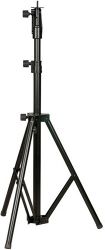
Height: 1.346 - 2.04 m • Maximum load: 30 kg • Suitable for 4 lights • : Length (mm): 1426 mm • Width (mm): 980 mm • Minimum Height (m): 1.346 m • Maximum Height (m):...
€107.27 *
incl. tax, free shipping to Germany
[International shipping costs]
Availability:
Delivery time: 3-5 days
EUROLITE STV-250 Verfolgerstativ, schwarz
EUROLITE STV-250 Follow Spot Stand, black
PRO follow stand for mobile lighting systems Heavy-duty stainless steel version for extra stability and safety • Tripod legs made of stainless steel • Tripod legs with optional slant for...
€289.00 *
incl. tax, free shipping to Germany
[International shipping costs]
Availability:
Delivery time: 3-5 days
Facts
Follow Spot Stands – Professional Support for Stage Lighting: Follow spot stands are the backbone of professional stage lighting, providing stable, adjustable support for spotlights, follow spots, and theatrical luminaires. Whether you're lighting a theater production, concert stage, or corporate event, the right follow spot stand ensures your lighting operator can work safely and effectively. At LTT, you'll find robust follow spot stands... Read more »
Viewed
Facts

Follow Spot Stands – Professional Support for Stage Lighting

Follow spot stands are the backbone of professional stage lighting, providing stable, adjustable support for spotlights, follow spots, and theatrical luminaires. Whether you're lighting a theater production, concert stage, or corporate event, the right follow spot stand ensures your lighting operator can work safely and effectively. At LTT, you'll find robust follow spot stands from leading manufacturers like Manfrotto, Eurolite, and Showgear – engineered for the demanding requirements of professional event technology.

What Are Follow Spot Stands?

Follow spot stands are specialized heavy-duty tripods designed to support spotlights and follow spots used in theatrical and event lighting applications. Unlike standard light stands, follow spot stands feature reinforced construction, extended height ranges, and significantly higher load capacities to accommodate the weight and operational demands of professional spotlights.

The defining characteristics of follow spot stands include their robust materials – typically stainless steel, heavy-gauge steel, or reinforced aluminum – and their ability to support loads ranging from 30 kg to 50 kg or more. Height adjustment mechanisms vary from simple telescoping designs with safety rings to wind-up systems with crank handles, offering precise positioning typically between 88 cm and 204 cm.

What distinguishes follow spot stands from conventional lighting tripods is their stability under operational conditions. Theater follow spots require operators to manually adjust the light during performances, creating dynamic loads and potential tipping moments. Follow spot stands counter this with wide footprints (often 90–98 cm when deployed), low center of gravity, and secure locking mechanisms that prevent accidental height changes during use.

Professional follow spot stands also incorporate safety features mandated by DGUV Vorschrift 17 (formerly BGV C1) for stage equipment in Germany and similar international standards. These include positive locking mechanisms, clearly marked maximum load ratings, and construction that prevents catastrophic failure even under overload conditions.

Applications in Professional Event Technology

Follow spot stands are essential equipment across multiple event technology scenarios. In theater and performing arts venues, they support follow spots that track performers across the stage, providing dramatic highlighting and focus. The stands' adjustable height allows positioning in orchestra pits, side stage locations, or elevated platforms, adapting to the specific sightlines of each production.

Concert and touring productions rely on follow spot stands for both front-of-house and side-fill positions. The portability and quick-setup characteristics of professional stands make them ideal for touring applications where equipment must be assembled and struck rapidly. Many touring professionals choose models with wind-up mechanisms for precise, repeatable height settings night after night.

Corporate events, trade shows, and conferences use follow spot stands to highlight speakers, product demonstrations, and award presentations. The professional appearance and stability of quality stands contribute to the overall production value, while their compatibility with standard theatrical lighting fixtures provides flexibility in equipment selection.

House of worship installations increasingly adopt follow spot stands for dynamic lighting of worship leaders, choirs, and special presentations. The ability to position lighting operators in balconies or rear positions while maintaining stable support for heavy spotlights makes these stands invaluable in sanctuary environments.

Beyond traditional follow spot applications, these heavy-duty stands also support moving head fixtures, LED spotlights, and effect lighting in situations where overhead rigging is impractical or unavailable. Their high load capacity and stability make them suitable for temporary installations where ground-supported lighting is the only option.

Quality Standards and Professional Selection Criteria

Selecting the right follow spot stand requires understanding several critical technical specifications. Load capacity is paramount – professional stands typically support 30 kg to 50 kg maximum loads. The Showgear Follow Spot Stand, for example, handles up to 30 kg across a height range of 1,346 mm to 2,040 mm, making it suitable for most compact follow spots and LED spotlights. The Eurolite STV-250 extends this to 50 kg capacity with a height range of 110 cm to 160 cm, accommodating heavier traditional discharge follow spots.

Construction materials directly impact longevity and reliability. Stainless steel legs resist corrosion in outdoor and high-humidity environments, while heavy-gauge steel center columns provide the rigidity needed to prevent wobble during operation. Aluminum components reduce transport weight without sacrificing structural integrity. Leading manufacturers like Manfrotto have built their reputation on precision-engineered stands that balance weight, strength, and portability – their 070BU and 070CSU models are industry standards in professional theater and broadcast applications.

Height adjustment mechanisms fall into two categories: telescoping with friction locks and wind-up systems with crank handles. Telescoping designs offer speed and simplicity, ideal for applications where approximate positioning is sufficient. Wind-up mechanisms provide millimeter-precise adjustment and maintain height under load without drift, essential for applications requiring exact repeatability.

Safety certifications matter in professional contexts. Equipment used in German venues must comply with DGUV Vorschrift 17, which mandates specific construction standards, load testing, and marking requirements for stage equipment. TÜV certification provides independent verification of safety claims. When specifying stands for professional installations, verify that models carry appropriate certifications for your jurisdiction.

Price brackets reflect these quality differences. Entry-level professional stands start around €125–€150, offering basic functionality with adequate safety margins. Mid-range models (€200–€300) incorporate wind-up mechanisms, higher load capacities, and premium materials. Specialist stands for broadcast and high-end theater applications can exceed €400, justified by precision engineering and extended service life.

DGUV Vorschrift 17 Compliance and Safety Standards

DGUV Vorschrift 17 (formerly BGV C1) establishes comprehensive safety requirements for stage and production equipment in Germany, and follow spot stands used in professional contexts must comply with these regulations. The standard addresses construction, testing, marking, and operational requirements to prevent accidents and equipment failures.

Structural requirements under DGUV Vorschrift 17 mandate that follow spot stands incorporate positive locking mechanisms that cannot accidentally release under vibration or operational loads. Safety rings or locking collars must secure height adjustments, preventing unintended collapse. The standard also requires clear, permanent marking of maximum load capacity and minimum/maximum height specifications on each stand.

Material specifications ensure that stands can withstand not only static loads but also dynamic forces generated during operation. When a lighting operator adjusts a follow spot, they create lateral forces and tipping moments. Compliant stands must demonstrate adequate safety factors – typically 5:1 for static loads and 3:1 for dynamic loads – verified through destructive testing during certification.

Inspection and maintenance protocols form another critical component. DGUV Vorschrift 17 requires annual inspections of stage equipment by qualified personnel, with documentation of inspection results. For follow spot stands, inspections verify the integrity of locking mechanisms, absence of corrosion or structural damage, and proper function of all adjustment systems. Stands showing wear, deformation, or compromised safety features must be removed from service.

Beyond German regulations, international venues may require compliance with EN 1090 for structural steelwork, ISO standards for load-bearing equipment, or jurisdiction-specific theatrical safety codes. When sourcing stands for international touring or installation projects, verify that equipment carries certifications recognized in the destination country.

At LTT, we prioritize equipment that meets or exceeds these safety standards. Our selection includes TÜV-certified models and stands from manufacturers with established compliance programs, ensuring you can specify equipment confidently for professional applications where safety and regulatory compliance are non-negotiable.

Integration with Truss Systems and Rigging Equipment

While follow spot stands are primarily ground-support solutions, professional event setups often integrate them with broader rigging and truss systems to create comprehensive lighting infrastructures. Understanding how follow spot stands complement overhead rigging helps you design flexible, efficient lighting plots.

Ground-supported follow spots serve as essential supplements to overhead truss-mounted fixtures in venues where rigging points are limited or impractical. In temporary event spaces, exhibition halls, or outdoor festivals, follow spot stands provide front-of-house and side-fill positions without requiring overhead structure. This approach reduces rigging complexity and setup time while maintaining professional lighting coverage.

The M12 mounting threads standard on professional follow spot stands ensure compatibility with a wide range of lighting fixtures and accessories. This standardization allows you to mount not only follow spots but also moving heads, LED wash fixtures, or effect lights, creating ground-supported lighting positions that integrate seamlessly with your overhead rig. When combined with DMX control, ground-supported fixtures on follow spot stands become part of a unified lighting system.

Stability considerations become critical when integrating stands into larger setups. Position stands to avoid cable trip hazards, ensure adequate clearance from truss structures during assembly and strike, and account for operator movement around the stand during shows. Professional practice includes securing stand legs with sandbags or weights when operating near audience areas or in outdoor conditions where wind loading is a concern.

For touring productions, the combination of truss systems and follow spot stands offers maximum flexibility. Core lighting infrastructure travels as overhead rig, while follow spot stands adapt to venue-specific requirements – balcony positions in theaters, floor positions in arenas, or elevated platforms in outdoor amphitheaters. This modular approach reduces the total equipment inventory while maintaining consistent lighting quality across diverse venues.

LTT's expertise in both truss systems (through our Naxpro-Truss and Riggatec product lines) and lighting support equipment means we can advise on integrated solutions that optimize your setup efficiency, safety, and performance quality. Whether you're building a permanent installation or a touring package, we'll help you specify the right combination of overhead and ground-supported infrastructure.

LTT – Your Specialist for Event Technology

At LTT, we've been supporting event professionals for over 25 years with high-quality equipment and expert advice. Our follow spot stand selection reflects our commitment to professional-grade solutions – from proven Manfrotto models trusted in broadcast and theater to robust Eurolite and Showgear stands engineered for touring and rental applications.

As both a specialist retailer and manufacturer with our own production facility in Germany, we understand the demands of professional event technology. Our Naxpro-Truss, Riggatec, and Bullstage brands set industry standards, and we apply the same quality criteria when selecting third-party equipment for our catalog. Every follow spot stand we offer meets our standards for safety, durability, and professional performance.

You benefit from free shipping on orders over €69, express delivery options for time-critical projects, and worldwide shipping to support international productions. Our B2B customers appreciate wholesale pricing for volume orders and our international dealer network for Naxpro-Truss and Riggatec products. With 3-year LTT warranty coverage and over 100,000 positive customer reviews, you can specify equipment confidently, knowing you're backed by a reliable partner.

Whether you're equipping a theater, building a touring lighting package, or supplying a rental inventory, LTT provides the professional-grade follow spot stands and comprehensive event technology solutions you need to achieve impressive results.

FAQ – Questions & Answers

What is the meaning of follow spot stands in event technology?

Follow spot stands are specialized heavy-duty tripods designed to support spotlights and follow spots used in theatrical and event lighting. The term refers to stands engineered with reinforced construction, high load capacities (typically 30–50 kg), and extended height adjustment ranges (commonly 88 cm to 204 cm) to accommodate professional stage lighting fixtures. Unlike standard light stands, follow spot stands incorporate safety features mandated by DGUV Vorschrift 17 and similar standards, including positive locking mechanisms and wide footprints for stability during operation. They enable lighting operators to position and adjust spotlights safely in theater, concert, corporate event, and broadcast applications where overhead rigging is impractical or unavailable.

What are synonyms for follow spot stands?

Follow spot stands are also known by several alternative terms in the event technology industry. Common synonyms include spotlight stands, theater tripods, follow spot tripods, and stage lighting stands. In German-speaking markets, the term Verfolgerstative is standard. Professional specifications may also refer to them as heavy-duty light stands or professional lighting tripods to distinguish them from lighter consumer-grade equipment. In broadcast contexts, they're sometimes called studio spotlight stands. Regardless of terminology, all these terms describe the same category of robust, high-capacity tripods engineered specifically to support the weight and operational demands of professional spotlights and follow spots in performance and event environments.

What is the maximum weight capacity for follow spot stands?

Professional follow spot stands typically support maximum loads ranging from 30 kg to 50 kg, depending on the model and construction. Entry-level professional stands like the Showgear Follow Spot Stand handle up to 30 kg, suitable for compact LED follow spots and modern lightweight fixtures. Mid-range and heavy-duty models such as the Eurolite STV-250 extend capacity to 50 kg, accommodating traditional discharge follow spots and heavier theatrical luminaires. Premium models from manufacturers like Manfrotto may support even higher loads for specialized broadcast and theater applications. Always verify the manufacturer's specified maximum load rating and never exceed it – DGUV Vorschrift 17 compliance requires adherence to marked capacity limits, and overloading compromises both safety and equipment longevity.

How do I adjust the height of a follow spot stand?

Follow spot stand height adjustment mechanisms fall into two main categories. Telescoping stands feature nested tubes with friction locks or quick-release clamps – loosen the locking mechanism, extend or retract the center column to the desired height, then tighten the lock and engage the safety ring to secure the position. Wind-up stands use a crank handle connected to a geared mechanism – rotate the crank to raise or lower the platform smoothly, with the gear system holding the height under load without drift. Both systems incorporate safety rings or locking collars that must be engaged after adjustment to prevent accidental collapse. Always adjust height with minimal or no load on the stand, verify that all locking mechanisms are fully engaged before mounting fixtures, and consult the manufacturer's instructions for model-specific procedures to ensure DGUV Vorschrift 17 compliance.

Which follow spot stand is suitable for theater applications?

Theater applications require follow spot stands with specific characteristics: high load capacity (typically 35–50 kg) to support traditional discharge follow spots, precise height adjustment for exact sightline positioning, and DGUV Vorschrift 17 compliance for safety in public venues. The Manfrotto 070BU and 070CSU models are industry standards in professional theater, offering robust construction, wind-up mechanisms for millimeter-precise adjustment, and proven reliability in demanding production environments. The Eurolite STV-250 provides 50 kg capacity and TÜV certification at a more accessible price point, making it suitable for regional theaters and touring productions. For permanent installations, prioritize stands with stainless steel construction to resist corrosion in climate-controlled theater environments, and verify that models carry appropriate safety certifications for your jurisdiction.

What materials are professional follow spot stands made from?

Professional follow spot stands utilize three primary materials, each offering specific advantages. Stainless steel is used for legs and structural components in premium models, providing excellent corrosion resistance for outdoor events and high-humidity environments while maintaining strength and rigidity. Heavy-gauge steel forms the center columns and load-bearing elements in most professional stands, offering maximum strength-to-cost ratio and the rigidity needed to prevent wobble under operational loads. Aluminum alloys appear in portable touring models where weight reduction is critical, providing adequate strength with significantly lower transport weight than steel equivalents. Many professional stands combine materials strategically – stainless steel legs for corrosion resistance, steel center columns for rigidity, and aluminum accessories to optimize the balance between durability, stability, and portability. Construction quality and material thickness matter more than material choice alone; verify that stands meet DGUV Vorschrift 17 or equivalent safety standards regardless of material composition.

How do follow spot stands integrate with DMX lighting systems?

Follow spot stands themselves are passive mechanical support equipment and do not directly integrate with DMX lighting control systems. However, the fixtures mounted on follow spot stands – such as LED follow spots, moving head spotlights, or intelligent luminaires – often feature DMX control capability. When using DMX-controlled fixtures on follow spot stands, run DMX cable from your lighting console to the fixture mounted on the stand, using standard 3-pin or 5-pin XLR connections. The stand's M12 mounting thread accommodates fixtures with integrated DMX receivers, allowing you to incorporate ground-supported positions into your overall DMX lighting network. For manual follow spots without DMX control, the stand simply provides stable positioning while the operator controls the fixture mechanically. In integrated lighting systems, follow spot stands enable flexible positioning of DMX-controlled fixtures in locations where overhead rigging is unavailable, complementing your truss-mounted rig with ground-supported lighting positions.

What maintenance do follow spot stands require?

Professional follow spot stands require regular inspection and maintenance to ensure safety and longevity, particularly when used in applications subject to DGUV Vorschrift 17. Annual inspections by qualified personnel are mandatory in professional German venues, verifying the integrity of locking mechanisms, absence of corrosion or structural damage, proper function of adjustment systems, and legibility of load capacity markings. Between formal inspections, operators should clean stands after each use to remove dust and debris, inspect for visible damage or deformation before each setup, and lubricate telescoping sections and wind-up mechanisms according to manufacturer specifications. Stainless steel components require minimal maintenance beyond cleaning, while steel parts benefit from light oil application to prevent rust, especially after outdoor use. Store stands in dry conditions, avoid exceeding maximum load ratings, and replace any stand showing cracks, bent components, or compromised locking mechanisms immediately. Proper maintenance extends service life, ensures regulatory compliance, and prevents equipment failures during critical productions.
// Countdown for Black Deals