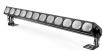
Light effects
Light Effects – Put Your Stage in the Spotlight
Whether you are running a club night, headlining a festival stage, or producing a corporate event, the right light effects transform any venue into an unforgettable visual experience. At LTT, you will find a comprehensive range of professional light effects — from classic strobe lights and UV bars to cutting-edge LED effect fixtures and outdoor-rated units. Every product in this category is selected for professional application, so you can rely on consistent performance night after night and achieve truly impressive results every time the lights go down.
What Are Light Effects? Technology and Types Explained
Light effects are dedicated fixtures designed to produce dynamic, attention-grabbing visual output beyond standard illumination. Unlike conventional floodlights or profile spotlights — which aim to light a subject evenly and predictably — light effects are engineered to move, flash, scatter, or colour the space itself, making the atmosphere an active part of the performance.
The Main Categories
- Strobe lights emit rapid, high-intensity white or coloured flashes. Flash rates are typically adjustable from 1 Hz up to 20 Hz or more, creating everything from a slow cinematic freeze-frame effect to a full-speed blinder burst. Professional strobes are controlled via DMX-512, ensuring all units in a rig fire in perfect synchronisation.
- UV (ultraviolet) black lights emit light at wavelengths of approximately 365–395 nm, causing fluorescent materials, face paints, and white fabrics to glow brilliantly. Available as traditional UV tubes, LED bars, and compact LED spotlights, they are among the simplest yet most atmospheric effects available.
- Mirror balls and motor-driven spheres remain a timeless classic. A single narrow spot aimed at a rotating mirror ball distributes hundreds of reflected light points across every surface in the room — a low-tech solution with an enduring wow-factor.
- LED effect bars and multi-beam fixtures combine RGBW or RGBA LED arrays with lenses, prisms, or motorised heads to project coloured beams, chases, and pixel-mapped patterns. Power consumption is typically 30–150 W per unit, making them far more energy-efficient than their discharge-lamp predecessors.
- Gobo projectors use metal or glass templates (gobos) to project sharp shapes, logos, or text onto walls, floors, and ceilings — indispensable for corporate events and trade-show branding.
The key distinction between light effects and moving lights lies in complexity: moving heads offer full pan/tilt articulation and are programmed as individual intelligent fixtures, whereas most light effects operate in automatic, sound-to-light, or simple DMX modes, making them faster to deploy and easier to operate.
Where and When Are Light Effects Used?
Light effects are deployed across a remarkably wide range of professional and semi-professional environments. Understanding the right fixture for each scenario is the key to a polished result.
Live Music and Concert Stages
On a concert stage, strobes are used to punctuate musical peaks, while UV bars wash the stage in ultraviolet during atmospheric passages. LED effect bars mounted on truss constructions above the stage provide colour wash and beam effects that complement the main moving-light rig without duplicating it.
Clubs and Discotheques
Clubs rely heavily on light effects for their dancefloor atmosphere. A typical installation combines a central mirror ball with motor, two or four LED multi-beam effect fixtures, a UV bar, and a strobe — all running on a DMX loop from a central light controller. Sound-to-light mode allows the fixtures to react automatically to the music without a dedicated lighting operator.
Corporate Events and Trade Shows
Gobo projectors are the go-to choice for branding: a company logo or event hashtag can be projected onto a plain wall or floor in seconds. UV effects and LED colour washes add ambience to product launches and gala dinners without requiring complex programming.
Theatre and Performing Arts
Theatre productions use strobe effects sparingly but powerfully — a 250 W professional strobe at full intensity during a storm scene creates a visceral audience reaction that no other fixture can replicate. UV effects are standard in dance and contemporary performance for costume reveals and fluorescent set pieces.
Outdoor Events and Festivals
For outdoor use, always check the IP rating of any fixture. IP44-rated or higher units are suitable for covered outdoor stages, while IP65 fixtures can withstand direct rain. Pair outdoor light effects with appropriate outdoor spotlights for a complete weatherproof rig.
Buying Criteria and Professional Standards
Choosing the right light effect fixture means looking beyond the headline price. The following criteria separate professional-grade equipment from consumer novelties.
Power and Light Output
For strobe lights, a minimum of 150 W is recommended for mid-sized venues (up to 300 m²); large stages and outdoor events typically require 400 W or above. UV LED bars should deliver at least 36 W of true UV output (not white LEDs with a purple filter) to achieve visible fluorescence at distances over 3 metres. LED effect fixtures in the professional range draw between 50 W and 200 W, with RGBW or RGBA colour mixing for accurate hue reproduction.
DMX Control
Every fixture intended for professional use should feature a DMX-512 input and output (3-pin or 5-pin XLR), allowing it to be integrated into a full lighting network. The number of DMX channels varies: a basic strobe may use just 2 channels (intensity + flash rate), while a complex LED effect bar can occupy 12–32 channels. Always check the channel count against your controller's capacity before purchasing.
Build Quality and Thermal Management
Professional fixtures from brands such as Eurolite, Showtec, and Cameo feature aluminium housings with active cooling fans and thermal protection circuits that prevent overheating during extended operation. Budget units often use plastic housings that degrade under sustained heat, leading to premature failure. beamZ Pro and Chauvet DJ occupy the mid-range, offering solid build quality at accessible price points — typically €80–€350 for effect bars and €150–€600 for professional strobes.
Certifications
For use in public venues in the EU and UK, fixtures must carry CE marking as a minimum. For touring and rental stock, look for units with IP ratings where outdoor use is anticipated, and confirm that the fixture complies with EN 60598 (luminaire safety standard). Rental-grade units should also feature robust locking connectors and road-worthy chassis.
Warm-Up Time
LED-based light effects reach full output instantly — a significant operational advantage over legacy discharge-lamp strobes, which could require 30–60 seconds of warm-up. This makes LED the default choice for any application where the fixture needs to be ready on cue.
DMX Control and Integration: A Deep Dive
DMX-512 (Digital Multiplex) is the industry-standard protocol for controlling professional light effects, and understanding it is essential for anyone building or operating a professional lighting rig.
How DMX Works
A DMX network carries up to 512 individual channels on a single cable run (called a "universe"). Each channel transmits a value between 0 and 255. A fixture is assigned a start address — the first DMX channel it listens to — and occupies as many consecutive channels as it has controllable parameters. For example, a strobe set to address 001 using 2 channels will read channel 1 for intensity and channel 2 for flash rate.
Daisy-Chaining and Termination
Fixtures are connected in a daisy-chain topology: the DMX output of the controller feeds into the input of the first fixture, which passes the signal to the second, and so on. The final fixture in the chain must be fitted with a 120-ohm terminator on its DMX output to prevent signal reflections that cause erratic behaviour. Professional 5-pin XLR cables are preferred over 3-pin adaptors for long cable runs, as the two spare conductors provide additional shielding.
Universes and Expansion
A single DMX universe supports a maximum of 512 channels. A typical club rig with 20 fixtures averaging 10 channels each uses 200 channels — comfortably within one universe. Larger festival rigs with hundreds of fixtures require multi-universe controllers and Art-Net or sACN distribution over Ethernet. Controllers from brands such as Madrix and Daslight support multi-universe output and are widely used for pixel-mapped LED installations.
Sound-to-Light and Automatic Modes
Many light effects include a built-in microphone for sound-to-light operation, where the fixture reacts to ambient audio without any DMX controller. This is ideal for smaller venues, mobile DJs, and temporary installations where programming time is limited. However, sound-to-light mode cannot synchronise multiple fixtures precisely — for a coherent multi-fixture show, DMX control via a dedicated light controller is always the professional choice.
RDM: Remote Device Management
RDM (Remote Device Management), defined in the ANSI E1.20 standard, extends DMX-512 to allow bidirectional communication between controller and fixture. An RDM-capable controller can automatically detect all fixtures on the network, read their current start addresses, and even update firmware remotely — dramatically reducing setup time on large rigs. When purchasing new fixtures, RDM compatibility is a worthwhile investment for any professional or semi-professional installation.
LTT – Your Expert for Professional Event Technology
With over 25 years of experience in professional event technology, LTT is your reliable partner for light effects and the complete technical infrastructure around them. Whether you are equipping a touring rig, a permanent club installation, or a one-off corporate event, LTT's extensive portfolio covers every requirement — from entry-level party light effects to high-output professional strobes and DMX-controlled LED arrays.
All orders benefit from the 3-year LTT warranty, and shipping is free on orders over €69 — with express delivery options available for urgent event deadlines. LTT ships worldwide, and trade customers and resellers can apply for wholesale pricing through the dedicated B2B programme.
Not sure which light effects suit your venue or production? The LTT team is available for consulting and planning support — from fixture selection to full DMX channel mapping. Explore the complete light category to discover complementary products including moving lights, floodlights, and light controllers, all from a single trusted source.
Combining Light Effects with Atmospheric Special Effects
Light effects reach their full potential when combined with atmospheric special effects. Haze, fog, and CO₂ bursts do not just add drama on their own — they make light beams visible in mid-air, turning a flat wash of colour into a three-dimensional laser-like shaft that audiences can see and feel.
Haze vs. Fog: Which to Choose?
A hazer produces a fine, persistent atmospheric haze that hangs evenly in the air for extended periods, making beam effects from LED bars, moving heads, and strobes dramatically more visible without obscuring the stage or performers. Hazers are the professional standard for concerts, theatre, and broadcast productions. A fog machine, by contrast, produces dense, low-lying clouds of fog that dissipate quickly — ideal for dramatic entrances, horror effects, and dance floors where a momentary burst of atmosphere is required.
For beam-heavy light effect rigs, a hazer is almost always the better choice. Visit the hazers category or the fog machines category to find the right atmospheric device for your setup.
CO₂ Effects
CO₂ effect devices produce instant, high-pressure jets of white vapour that catch coloured light beautifully. Triggered via DMX at a precise musical cue, a CO₂ burst combined with a high-output strobe creates one of the most visually striking moments possible in a live show. CO₂ effects are popular at festivals, club events, and product launches. Browse the full range in the CO₂ effect devices category.
Practical Integration Tips
- Position hazers at the rear of the stage or in the wings to distribute haze evenly across the performance area without blowing directly onto performers.
- Avoid running fog machines and hazers simultaneously in the same space — the two fluid types can interact and produce an uneven, patchy atmosphere.
- Always check venue ventilation capacity before deploying any atmospheric effect; most professional venues require a minimum air change rate to maintain safe CO₂ levels and visibility for audience egress.
- Use DMX to trigger atmospheric effects in sync with your light effects for a fully coordinated show — a single cue on your lighting console can fire a CO₂ burst, trigger a strobe, and cue a colour change simultaneously.
FAQ – Questions & Answers
In professional event technology, light effects are dedicated fixtures designed to produce dynamic visual output — including flashing, colour-changing, beam-projecting, or UV-emitting effects — that enhance the atmosphere of a performance or event. Unlike standard floodlights or profile spotlights, which illuminate a subject evenly, light effects actively shape the mood of the space. Common types include strobe lights, UV bars, LED effect bars, mirror balls, and gobo projectors, all controllable via DMX-512 for precise, synchronised operation.
A strobe light emits rapid, high-intensity flashes at a programmable rate — typically 1 to 20 Hz — creating freeze-frame or blinding burst effects that are impossible to replicate with a standard floodlight. A floodlight produces a continuous, steady beam intended to illuminate a subject or area uniformly. Strobe lights are controlled via DMX-512 and are used for dramatic impact at musical peaks, theatrical storm scenes, or club dancefloors. Standard floodlights are used for general stage illumination, wash lighting, and architectural lighting.
Professional light effects vary considerably in price depending on type and specification. Entry-level UV LED bars and basic LED effect fixtures start from approximately €30–€80. Mid-range LED effect bars from brands such as beamZ Pro or Showtec typically cost €80–€350. Professional-grade strobes from Eurolite or Cameo range from €150 to €600 or more. High-output multi-beam LED effect fixtures for touring and large venues can exceed €800 per unit. Free shipping is available on orders over €69 at LTT.
For a club or discotheque, a combination of LED multi-beam effect fixtures, a UV bar, a mirror ball with motor, and a professional strobe light delivers the broadest range of atmosphere. LED multi-beam fixtures provide colour chases and beam effects on the dancefloor, while the UV bar activates fluorescent clothing and décor. The strobe adds impact at peak moments. All units should feature DMX-512 input for synchronised control, and sound-to-light mode is useful for unmanned operation during quieter periods.
Most professional light effects support three operating modes: DMX-512 control via a lighting console or controller, automatic mode (pre-programmed internal sequences), and sound-to-light mode (reacting to ambient audio via a built-in microphone). For a single fixture or a small installation, automatic or sound-to-light mode is often sufficient. For multi-fixture rigs where precise synchronisation and cue-based control are required — such as live concerts or theatre productions — a dedicated DMX controller is essential. LTT stocks a full range of compatible light controllers.
A UV LED bar uses arrays of high-power UV LEDs (typically 365–395 nm) to produce ultraviolet light, offering instant-on operation, low power consumption (usually 18–72 W), long service life (50,000+ hours), and DMX controllability. A traditional UV fluorescent tube uses a gas-discharge lamp that requires a warm-up period of 30–60 seconds, consumes more energy, and cannot be dimmed or DMX-controlled without additional hardware. For professional event use, UV LED bars are the current standard due to their reliability, efficiency, and ease of integration into a DMX rig.
Yes, many light effects are rated for outdoor use, but the IP (Ingress Protection) rating of the fixture must match the conditions. IP44-rated fixtures are suitable for covered outdoor stages where direct rain contact is unlikely. IP65-rated fixtures can withstand rain and dust and are appropriate for open-air festival stages and permanent outdoor installations. Always verify the IP rating in the product specification before deploying any light effect outdoors. Pair outdoor-rated light effects with IP-rated cabling and connectors to maintain the integrity of the weatherproof installation.
Combining light effects with a hazer or fog machine makes light beams visible in mid-air, transforming flat colour washes into dramatic three-dimensional shafts of light. A hazer produces a fine, persistent atmospheric haze ideal for beam-heavy rigs — position it at the rear of the stage or in the wings for even distribution. A fog machine delivers dense, short-lived bursts of fog suited to dramatic entrances or dancefloor moments. Trigger both atmospheric effects and light effects via DMX from a single lighting console for fully synchronised, cue-accurate show control.