

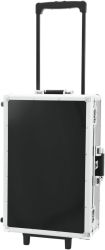
Top seller

ROADINGER Universal Case SOD-1 with Trolley
€169.00
*
Availability:
Delivery time: 3-5 days
Delivery time: 3-5 days

ROADINGER Universal Case with Trolley
€159.00
*
Availability:
Currently not available
Currently not available

ROADINGER UKC-4R Universal Case with Trolley
€119.00
*
Availability:
Delivery time: 3-5 days
Delivery time: 3-5 days

Manfrotto Trolley for 3 demountable C-Stands and accessories
€369.00
*
Availability:
Near-term available
Delivery time: approx. 1 week
Delivery time: approx. 1 week
Delivery time: approx. 1 week

ROADINGER CD Case, black, 200 CDs, with Trolley
€134.00
*
Availability:
Delivery time: 3-5 days
Delivery time: 3-5 days

ROADINGER CD Case black 120 CDs with Trolley
€109.00
*
Availability:
Delivery time: 3-5 days
Delivery time: 3-5 days
NEW

UDG Ultimate Flight Case 4 CDJ/ Mixer Black Plus (Trolley & Spinner Wheels)
€449.95
*
Availability:
Currently not available;
Article is coming soon
Article is coming soon
Currently not available
29
Articles
No results were found for the filter!
ROADINGER CD Case black 120 CDs with Trolley
ROADINGER CD Case black 120 CDs with Trolley
Lost in space!Even in times of MP3 formats marching into the DJ field, CDs are definitely present, vehemently defending their position. For that matter it is logical for us to introduce our new CD...
€109.00
*
Availability:
Delivery time: 3-5 days
Delivery time: 3-5 days
ROADINGER CD Case, black, 200 CDs, with Trolley
ROADINGER CD Case, black, 200 CDs, with Trolley
CD case with trolley function, black 4 compartments for 200 CDs • Interior with foam padding • Removable cover • Aluminum profile frames 20mm with rounded edges • Rugged...
€134.00
*
Availability:
Delivery time: 3-5 days
Delivery time: 3-5 days

MAGMA RIOT DJ-BACKPACK
MAGMA RIOT DJ-BACKPACK
The RIOT DJ-BACKPACK is the latest and most compact model of the RIOT line. It was especially designed for digital-DJs travelling with a basic DVS setup such as 15” laptop, Timecode records...
€169.00
*
Availability:
Delivery time: 3-5 days
Delivery time: 3-5 days

MAGMA ROLLTOP BACKPACK III
MAGMA ROLLTOP BACKPACK III
The Rolltop Backpack III is an extremely rugged, entirely weather-proof and multi-functional backpack that is suitable for a wide variety applications. From carrying your DJ- equipment, to...
€119.00
*
Availability:
Delivery time: 3-5 days
Delivery time: 3-5 days
Manfrotto Trolley for 3 demountable C-Stands and accessories
Manfrotto Trolley for 3 demountable C-Stands and accessories
For the transport of up to three C-Stand kits • Compartment dividers made of extremely dense foam for protection • Adjustable, reinforced straps, removable transport inserts...
€369.00
*
Availability:
Near-term available
Delivery time: approx. 1 week
Delivery time: approx. 1 week
Delivery time: approx. 1 week

ROADINGER Universal Case G-2 with Trolley
ROADINGER Universal Case G-2 with Trolley
Carrying case With dividers • With acessory pocket in the cover • With documents drawer • High-quality workmanship with plywood multi-layer glued 4 mm, black, laminated...
€179.00
*
Availability:
Delivery time: 3-5 days
Delivery time: 3-5 days
ROADINGER Universal Case SOD-1 with Trolley
ROADINGER Universal Case SOD-1 with Trolley
Trolley case With dividers • High-quality workmanship with plywood multi-layer glued 4 mm, black • Interior with foam padding • Aluminum profile frames 22mm with rounded edges...
€169.00
*
Availability:
Delivery time: 3-5 days
Delivery time: 3-5 days

ROADINGER Universal Case UKC-1 with Trolley
ROADINGER Universal Case UKC-1 with Trolley
Trolley case High-quality workmanship with plywood multi-layer glued 4 mm, black, laminated • Interior with foam padding cover with foam padding • Aluminum profile frames 22mm with...
€139.00
*
Availability:
Delivery time: 3-5 days
Delivery time: 3-5 days

Chauvet DJ CHS-BPK Backpack
Chauvet DJ CHS-BPK Backpack
CHS-BPK The CHS-BPK backpack easily transports a variety of devices and laptops. Numerous compartments ensure organization and quick access, while a special inner compartment has an audio cable...
€79.90
*
Availability:
Near-term available
Delivery time: approx. 1 week
Delivery time: approx. 1 week
Delivery time: approx. 1 week
ROADINGER UKC-4R Universal Case with Trolley
ROADINGER UKC-4R Universal Case with Trolley
Trolley case with castors The article is delivered with pre-assembled Wheels • Pickfoam • Cabinet corner • High-quality workmanship with MDF (medium density fiberboard) 3.5 mm, black...
€119.00
*
Availability:
Delivery time: 3-5 days
Delivery time: 3-5 days
NEW

SHOWGEAR Vaultis Waterproof Backpack Case 485S Rugged case for professional equipment protection
SHOWGEAR Vaultis Waterproof Backpack Case 485S Rugged case for professional equipment protection
IP67 waterproof protective case • Foam interior included (lid + pick-and-pluck base) • Automatic pressure-release valve • Double-throw latches & soft-grip handle • Padlock...
€375.00
*
Availability:
Delivery time: 3-5 days
Delivery time: 3-5 days
NEW

UDG Urbanite MIDI Controller Backpack Large Black
UDG Urbanite MIDI Controller Backpack Large Black
UDG presents the Urbanite Series, cutting edge bags for today's on the go DJ's / Producer's. Each design not only makes you feel good, they make you look great. The Controller Backpack lets you...
€229.95
*
Availability:
Delivery time: approx. 2-3 weeks
Delivery time: approx. 2-3 weeks
NEW

UDG Ultimate ProducerBag Large Black/Orange Inside
UDG Ultimate ProducerBag Large Black/Orange Inside
Inspired by the legendary UDG ProducerBag, the UDG Ultimate ProducerBag Large has been created to cater for those electronic musicians who crave more space for their performance equipment. The UDG...
€229.95
*
Availability:
Delivery time: approx. 2-3 weeks
Delivery time: approx. 2-3 weeks
NEW

UDG Ultimate Producer Backpack Trolley Black/ Orange
UDG Ultimate Producer Backpack Trolley Black/ Orange
The ultimate companion for producers on the move - the UDG Ultimate Producer Backpack Trolley. This sleek and versatile backpack is designed to meet the demands of modern music producers and DJs,...
€299.95
*
Availability:
Delivery time: approx. 2-3 weeks
Delivery time: approx. 2-3 weeks
NEW

UDG Ultimate DIGI Backpack Black Orange
UDG Ultimate DIGI Backpack Black Orange
Ultimate DIGI Backpack specially designed for the laptop DJ. Constructed from high-quality water-resistant Nylon, it contains a cleverly designed side entry compartment for a laptop up to 16"...
 Express delivery possible
€169.00
*
Availability:
Low stock; Delivery time: 1-3 days
Delivery time: 1-3 days
NEW

UDG Ultimate Backpack Black Orange Inside
UDG Ultimate Backpack Black Orange Inside
The UDG Ultimate Backpack has been designed for general day to day work use with the digital DJ in mind. Constructed from high-quality water-resistant Nylon and contains a padded laptop compartment...
€149.00
*
Availability:
Low stock; Delivery time: 1-3 days
Delivery time: 1-3 days
NEW

UDG Ultimate Backpack Slim Black Camo Orange
UDG Ultimate Backpack Slim Black Camo Orange
The UDG Ultimate Backpack Slim is a light weight, slim fit backpack for DJ's that require a smaller version of UDG's larger size backpacks. Constructed from high-quality water-resistant Nylon it...
€149.95
*
Availability:
Delivery time: approx. 2-3 weeks
Delivery time: approx. 2-3 weeks
NEW

UDG Ultimate Backpack Slim Black Orange
UDG Ultimate Backpack Slim Black Orange
The UDG Ultimate Backpack Slim is a light weight, slim fit backpack for DJ's that require a smaller version of UDG's larger size backpacks. Constructed from high-quality water-resistant Nylon it...
€159.00
*
Availability:
Low stock; Delivery time: 1-3 days
Delivery time: 1-3 days
NEW

UDG Ultimate SlingBag Trolley Set DeLuxe MK2 Black
UDG Ultimate SlingBag Trolley Set DeLuxe MK2 Black
Incorporating a new hidden trolley system, smooth rolling in-line wheels, electroplated zippers and integrated combination lock, the world's best-selling 12" trolley bag has been reinforced...
€319.95
*
Availability:
Delivery time: approx. 2-3 weeks
Delivery time: approx. 2-3 weeks
NEW

UDG Ultimate SlingBag Trolley Set DeLuxe MK2 Black Orange
UDG Ultimate SlingBag Trolley Set DeLuxe MK2 Black Orange
Incorporating a new hidden trolley system, smooth rolling in-line wheels, electroplated zippers and integrated combination lock, the world's best-selling 12" trolley bag has been reinforced...
€289.00
*
Availability:
Low stock; Delivery time: 1-3 days
Delivery time: 1-3 days
NEW

UDG Ultimate Trolley To Go Black
UDG Ultimate Trolley To Go Black
The UDG trolleys To Go is specially designed to cater to the growing demand of the Airlines. With a solid body structure trolley bag + in-line wheels make it the ideal bag for those long airport...
€179.00
*
Availability:
Low stock; Delivery time: 1-3 days
Delivery time: 1-3 days
NEW

UDG Ultimate DIGI Trolley To Go Black Orange Inside
UDG Ultimate DIGI Trolley To Go Black Orange Inside
The UDG Ultimate DIGI Trolley To Go constructed with a solid body structure trolley bag with in-line wheels and a two stage-trolley handle makes it the ideal bag for those long airport walkways....
€199.00
*
Availability:
Low stock; Delivery time: 1-3 days
Delivery time: 1-3 days
NEW

UDG Ultimate SlingBag Trolley DeLuxe MK2 Black
UDG Ultimate SlingBag Trolley DeLuxe MK2 Black
The UDG SlingBag Trolley DeLuxe specially designed to protect your LP's and small DJ equipment + gear during travelling. With a capacity up to 60 records, this bag is perfect for mobile DJ's use or...
€205.90
*
Availability:
Low stock; Delivery time: 1-3 days
Delivery time: 1-3 days
NEW

UDG Ultimate SlingBag Trolley DeLuxe MK2 Black Orange
UDG Ultimate SlingBag Trolley DeLuxe MK2 Black Orange
The UDG SlingBag Trolley DeLuxe specially designed to protect your LP's and small DJ equipment + gear during travelling. With a capacity up to 60 records, this bag is perfect for mobile DJ's use or...
€229.95
*
Availability:
Delivery time: approx. 2-3 weeks
Delivery time: approx. 2-3 weeks