

Top seller

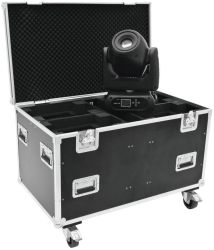
ROADINGER Flightcase 2x LCD ZL50
€749.00
*
incl. tax,
plus forwarding agency costs
Availability:
Delivery time: 3-5 days
Delivery time: 3-5 days
Bulky goods

ROADINGER Flightcase 2x LCD ZL55
€799.00
*
incl. tax,
plus forwarding agency costs
Availability:
Delivery time: 3-5 days
Delivery time: 3-5 days
Bulky goods

ROADINGER Flightcase Mirror Ball 30cm
€85.90
*
Availability:
Currently not available
Currently not available

ROADINGER Flightcase 2x LCD ZL65
€1,099.00
*
incl. tax,
plus forwarding agency costs
Availability:
Delivery time: 3-5 days
Delivery time: 3-5 days
Bulky goods

ROADINGER Transportcase for Effect Pedals EF-2
€129.00
*
Availability:
Delivery time: 3-5 days
Delivery time: 3-5 days

ROADINGER Turntable Case Tour Pro black -B-
€99.00
*
Availability:
Delivery time: 3-5 days
Delivery time: 3-5 days

beamZ FCC9 Flight Case for 8x BBP9 Series Spotlights
€349.00
*
incl. tax,
plus forwarding agency costs
Availability:
Delivery time: 3-5 days
Delivery time: 3-5 days
Bulky goods

beamZ FCC10 flight case for 8x BBP54 Combi Charging
€469.00
*
incl. tax,
plus forwarding agency costs
Availability:
Delivery time: 3-5 days
Delivery time: 3-5 days
Bulky goods
392
Articles
No results were found for the filter!
ROADINGER Turntable Case Tour Pro black -B-
ROADINGER Turntable Case Tour Pro black -B-
Flightcase for one turntable (up to 450 mm width)The foam padded Roadinger Flightcase offers you space for a turntable without cover up to a width of 450 mm.The high-quality finish with...
€99.00
*
Availability:
Delivery time: 3-5 days
Delivery time: 3-5 days

ROADINGER Flightcase Mirror Ball 50cm
ROADINGER Flightcase Mirror Ball 50cm
Simplify your transport!The simple function of cases is to protect their capacity from transport damages. In this concern, they protect mirror balls. With these high quality cases, balls with a...
€289.00
*
incl. tax,
plus forwarding agency costs
Availability:
Delivery time: 3-5 days
Delivery time: 3-5 days
Bulky goods

SHOWTEC Case for 2x Phantom 65 Value Line - with accessory compartment
SHOWTEC Case for 2x Phantom 65 Value Line - with accessory compartment
The Showtec Phantom series offers a wide range of reliable and high performance moving light effects, consisting of various types of Moving Head fixtures (Spot, Wash, Beam, Hybrid, and Matrix FX)...
€161.33
*
Availability:
Delivery time: 3-5 days
Delivery time: 3-5 days

SHOWGEAR Case for 4x LED Bar Value Line
SHOWGEAR Case for 4x LED Bar Value Line
: Height (mm): 308 mm • Width (mm): 1126 mm • Depth (mm): 285 mm • Inner Width: 1080 mm • Inner Depth: 248 mm • Weight: 6.9 kg • IP Rating: IP20 (indoor use only)...
€168.25
*
Availability:
Delivery time: 3-5 days
Delivery time: 3-5 days

ROADINGER Flightcase Mirror Ball 40cm
ROADINGER Flightcase Mirror Ball 40cm
Simplify your transport!The simple function of cases is to protect their capacity from transport damages. In this concern, they protect mirror balls. With these high quality cases, balls with a...
€170.68
*
Availability:
Delivery time: 3-5 days
Delivery time: 3-5 days

SHOWTEC Case for Showmaster 48 With accessory compartment
SHOWTEC Case for Showmaster 48 With accessory compartment
Dedicated flightCase for Showmaster 48 including powersupply compartiment : Rack Units (top): 6 U • Height (mm): 165 mm • Width (mm): 755 mm • Depth (mm): 415 mm • Inner Height:...
€106.25
*
Availability:
Delivery time: 3-5 days
Delivery time: 3-5 days

SHOWGEAR Case for 4x LED Par 56 Value Line - with elastic hook and loop straps
SHOWGEAR Case for 4x LED Par 56 Value Line - with elastic hook and loop straps
This case accommodates four LED Par 56 light fixtures. It is also suitable for the Showtec ACT Fresnel 50 WW. : Height (mm): 310 mm • Width (mm): 445 mm • Depth (mm): 445 mm • Inner...
€101.83
*
Availability:
Delivery time: 3-5 days
Delivery time: 3-5 days
ROADINGER Flightcase 2x LCD ZL50
ROADINGER Flightcase 2x LCD ZL50
Trunk case with castors, PRO version High-quality workmanship with plywood multi-layer glued , dark brown, laminated • Interior with foam padding cover with felt cover • Interior with...
€749.00
*
incl. tax,
plus forwarding agency costs
Availability:
Delivery time: 3-5 days
Delivery time: 3-5 days
Bulky goods

SHOWGEAR Case for 4x Flat Par Value Line
SHOWGEAR Case for 4x Flat Par Value Line
: Height (mm): 359 mm • Width (mm): 459 mm • Depth (mm): 313 mm • Inner Height: 260 mm • Inner Width: 420 mm • Inner Depth: 270 mm • Weight: 4.8 kg • IP Rating:...
€106.25
*
Availability:
Delivery time: 3-5 days
Delivery time: 3-5 days
ROADINGER Transportcase for Effect Pedals EF-2
ROADINGER Transportcase for Effect Pedals EF-2
Flightcase for effect pedalsThis ROADINGER flightcase was specially made for your effect pedals. So you always have these devices safely stowed away when you are on the way to your next gig. The...
€129.00
*
Availability:
Delivery time: 3-5 days
Delivery time: 3-5 days

SHOWTEC Case for 2x Phantom 65 With accessory compartment
SHOWTEC Case for 2x Phantom 65 With accessory compartment
Flight Case for 2x Phantom 65 + accessories • Custom hard foam • Swivel wheels with brake • Four built-in handles • Hinged lid • Components suitable for frequent touring...
€299.00
*
Availability:
Delivery time: 3-5 days
Delivery time: 3-5 days

ROADINGER Flightcase EC-B252 4x LED BAR-252 RGB
ROADINGER Flightcase EC-B252 4x LED BAR-252 RGB
Carrying case High-quality workmanship with plywood multi-layer glued 7 mm, black, laminated • Interior with foam padding • Aluminum profile frames 30mm with rounded edges • Rugged...
€199.00
*
Availability:
Delivery time: 3-5 days
Delivery time: 3-5 days

SHOWTEC Case for 4x Phantom 65 With accessory compartment
SHOWTEC Case for 4x Phantom 65 With accessory compartment
Flight Case for 4x Phantom 65 + accessories • Custom hard foam • Swivel wheels with brake • Four built-in handles • Hinged lid • Scan windows • Decent components...
€429.00
*
incl. tax,
plus forwarding agency costs
Availability:
Delivery time: 3-5 days
Delivery time: 3-5 days
Bulky goods

SHOWTEC Case for 4x Kanjo 10 / 60 With accessory compartment
SHOWTEC Case for 4x Kanjo 10 / 60 With accessory compartment
Flight Case for 4x Kanjo Wash / Spot + accessories • Custom hard foam • Two built-in handles • Hinged lid • Decent components suitable for frequent touring • The Showtec...
€212.50
*
Availability:
Delivery time: 3-5 days
Delivery time: 3-5 days

ROADINGER Flightcase Mirror Ball 100cm
ROADINGER Flightcase Mirror Ball 100cm
Simplify your transport!The simple function of cases is to protect their capacity from transport damages. In this concern, they protect mirror balls. With these high quality cases, balls with a...
€1,749.61
*
incl. tax,
plus forwarding agency costs
Availability:
Delivery time: 3-5 days
Delivery time: 3-5 days
Bulky goods

SHOWGEAR Case for 30 cm Mirror Ball Also fits Showtec Illumilift RGBW LED Sphere 25 cm
SHOWGEAR Case for 30 cm Mirror Ball Also fits Showtec Illumilift RGBW LED Sphere 25 cm
: Height (mm): 420 mm • Width (mm): 360 mm • Depth (mm): 345 mm • Inner Height: 330 mm • Inner Width: 310 mm • Inner Depth: 305 mm • Weight: 4.94 kg • IP Rating:...
€98.43
*
Availability:
Delivery time: 3-5 days
Delivery time: 3-5 days

SHOWTEC Case for 8x Compact Par 7/18 With accessory compartment
SHOWTEC Case for 8x Compact Par 7/18 With accessory compartment
Flight Case for 8x Compact Par 7/18 (MKI, MKII, MKIII) + accessories • Custom hard foam • Swivel wheels with brake • Four built-in handles • Hinged lid • Scan windows...
€406.30
*
incl. tax,
plus forwarding agency costs
Availability:
Delivery time: 3-5 days
Delivery time: 3-5 days
Bulky goods

SHOWGEAR Case for LED Bar Separate sections with protective foam
SHOWGEAR Case for LED Bar Separate sections with protective foam
: Height (mm): 310 mm • Width (mm): 1145 mm • Depth (mm): 310 mm • Inner Width: 1085 mm • Inner Depth: 250 mm • Weight: 15 kg • IP Rating: IP20 (indoor use only)...
€253.30
*
Availability:
Delivery time: 3-5 days
Delivery time: 3-5 days

ROADINGER Flightcase EC-SL4M 4x SLS size M
ROADINGER Flightcase EC-SL4M 4x SLS size M
Trunk case With 4 device compartments • High-quality workmanship with plywood multi-layer glued 7 mm, dark brown, laminated • Interior with felt cover • Aluminum profile frames 30mm...
€145.00
*
Availability:
Delivery time: 3-5 days
Delivery time: 3-5 days

ROADINGER Flightcase 2x LED PFE-50 3000K Profile Spot
ROADINGER Flightcase 2x LED PFE-50 3000K Profile Spot
Trunk case, PRO version High-quality workmanship with birch multiplex , dark brown, laminated • Branded hardware • Made in Europe • For further information about this product, please...
€189.00
*
Availability:
Delivery time: 3-5 days
Delivery time: 3-5 days

ROADINGER Flightcase 4x DMH-90/150/DMB-160/PLB-230
ROADINGER Flightcase 4x DMH-90/150/DMB-160/PLB-230
Trunk case with castors, PRO version For optimal security • With 4 device compartments • High-quality workmanship with birch multiplex 7 mm, dark brown, laminated • Interior with...
€629.00
*
incl. tax,
plus forwarding agency costs
Availability:
Delivery time: 3-5 days
Delivery time: 3-5 days
Bulky goods

SHOWTEC Charger Case for 6x EventLITE 4/10 Compact Flight Case
SHOWTEC Charger Case for 6x EventLITE 4/10 Compact Flight Case
Pre-wired for charging the fixtures inside the case • Durable Compact Flight case • Stacking recesses on top • Includes power cord for power supply at the case • Dedicated...
€416.50
*
Availability:
Delivery time: 3-5 days
Delivery time: 3-5 days

Cameo ZENIT® B60 CASE LSD BOX - LSD Box Flightcase for ZENIT B60
Cameo ZENIT® B60 CASE LSD BOX - LSD Box Flightcase for ZENIT B60
LSD Box Flightcase for ZENIT B60 Insert Tray with Grooves Foam for 12 Diffusers. suitable for the FLIGHTCASE ZENIT®B60 • : Product type: Flightcase Accessories • Type: Recessed Dishes...
€150.94
*
Availability:
Near-term available
Delivery time: approx. 1 week
Delivery time: approx. 1 week
Delivery time: approx. 1 week

Magic FX CASE for 4 MAGICFX® Power Shots
Magic FX CASE for 4 MAGICFX® Power Shots
This case, made of durable hard plastic, is designed to safely transport up to 4 Magic FX Power Shots. In the middle compartment is additional space to store the cables. Features Flightcase for up...
€249.00
*
Availability:
Delivery time: 3-5 days
Delivery time: 3-5 days