

Categories


207
Articles
No results were found for the filter!

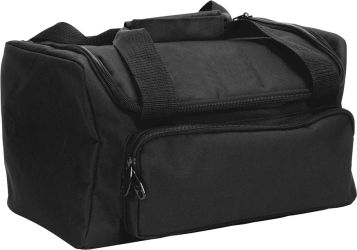
EUROLITE SB-12 Soft Bag
EUROLITE SB-12 Soft Bag
Practical black soft bag for LED bars (1 m length), adjustable divider Ideal for 1 or 2 LED bars with 1 meter length • Made of easy-care nylon • With divider • With 2 device...
€34.90
*
incl. tax,
plus shipping costs
Availability:
Delivery time: 3-5 days
Delivery time: 3-5 days

MONACOR TXS-10BELT/SW Belt bag, black
MONACOR TXS-10BELT/SW Belt bag, black
Belt bag, black, suitable for wireless pocket transmitters from MONACOR, IMG STAGELINE and JTS. Ideally suited for mobile applications (e.g. sports activities) • Flexible, adjustable strap...
€16.00
*
incl. tax,
plus shipping costs
Availability:
Delivery time: 3-5 days
Delivery time: 3-5 days

Adam Hall Stands SLTSBAG - Transport Bag for 2 Lighting Stands
Adam Hall Stands SLTSBAG - Transport Bag for 2 Lighting Stands
Transport Bag for 2 Lighting Stands : Product type: Stands and Tripod Accessories • Type: Transport bag • For number of stands: 2 • Material: Polyester • Color: Black • For...
€17.01
*
incl. tax,
plus shipping costs
Availability:
Near-term available
Delivery time: approx. 1 week
Delivery time: approx. 1 week
Delivery time: approx. 1 week

Gravity BG WBLS 331 - Transport Bag for Square Base Plate
Gravity BG WBLS 331 - Transport Bag for Square Base Plate
Transport Bag for Square Base Plate Sturdy carrier bag made of 1680D ballistic nylon for the square base plate (563 x 563 mm). • For GLS331B and GLS431B base plates • 5 mm tough padding...
 Express delivery possible
€29.03
*
incl. tax,
plus shipping costs
Availability:
Delivery time: 1-3 days
Delivery time: 1-3 days

Gravity BG SS 1 XLB - Transport Bag for 1 Large Speaker Stand
Gravity BG SS 1 XLB - Transport Bag for 1 Large Speaker Stand
Transport Bag for 1 Large Speaker Stand Durable, water repellent 600D nylon shell • 10 mm foam padding • Dual zippers with single pull grip • Carry straps positioned for even weight...
€33.00
*
incl. tax,
plus shipping costs
Availability:
Near-term available
Delivery time: approx. 1 week
Delivery time: approx. 1 week
Delivery time: approx. 1 week

LD Systems MAUI 11 G2 SAT BAG - Padded Bag For MAUI 11 G2 Column
LD Systems MAUI 11 G2 SAT BAG - Padded Bag For MAUI 11 G2 Column
Padded Bag For MAUI 11 G2 Column Carrying your MAUI column is as easy as 1, 2, 3 with this padded bag. It features two large handles with wrap-around grip, an adjustable hands-free shoulder strap...
€78.58
*
Availability:
Delivery time: 1-3 days
Delivery time: 1-3 days

EUROLITE SB-4 Soft Bag L
EUROLITE SB-4 Soft Bag L
Black soft bag for up to 4 devices, 320 x 320 x 200 mm Practical transport bag offers enough space for several lighting effects and accessories • With dividers • With 2 Outside pockets...
€49.90
*
incl. tax,
plus shipping costs
Availability:
Delivery time: 3-5 days
Delivery time: 3-5 days

Gravity BG MS 1 B - Neoprene Carry Bag for one Microphone Stand
Gravity BG MS 1 B - Neoprene Carry Bag for one Microphone Stand
Neoprene Carry Bag for one Microphone Stand Water-repellent neoprene bag with two-way head-to-head zipper • High quality material and workmanship • Guards against dust and scratches...
€15.64
*
incl. tax,
plus shipping costs
Availability:
Near-term available
Delivery time: approx. 1 week
Delivery time: approx. 1 week
Delivery time: approx. 1 week

Gravity BG SS 2 LB - Transport Bag for 2 Speaker Stands, Long
Gravity BG SS 2 LB - Transport Bag for 2 Speaker Stands, Long
Transport Bag for 2 Speaker Stands, Long High quality material • 15mm foam padding • Protective divider • Double zipper for easy access • Ergonomic handle • The BGSS 2 LB...
€46.41
*
incl. tax,
plus shipping costs
Availability:
Near-term available
Delivery time: approx. 1 week
Delivery time: approx. 1 week
Delivery time: approx. 1 week

Gravity BG SS 2 B - Transport Bag for 2 Speaker Stands
Gravity BG SS 2 B - Transport Bag for 2 Speaker Stands
Transport Bag for 2 Speaker Stands High quality material • 15mm foam padding • Protective divider • Double zipper for easy access • Ergonomic handle • The BGSS 2 B is a...
€46.92
*
incl. tax,
plus shipping costs
Availability:
Near-term available
Delivery time: approx. 1 week
Delivery time: approx. 1 week
Delivery time: approx. 1 week

Gravity BG DBLS 331 - Carry Bag for Distance Poles
Gravity BG DBLS 331 - Carry Bag for Distance Poles
Carry Bag for Distance Poles Rugged carry bag made of durable, water repellent 600D nylon • For GLS331B and GLS431B distance poles • 10 mm foam padding • Padded divider • Dual...
€46.53
*
incl. tax,
plus shipping costs
Availability:
Near-term available
Delivery time: approx. 1 week
Delivery time: approx. 1 week
Delivery time: approx. 1 week

EUROLITE SB-205 Soft Bag
EUROLITE SB-205 Soft Bag
Universal softbag Ideal for e.g. LED bars with 50 cm length and accessories • High-quality workmanship with nylon , black • With divider • With 2 device compartments • Interior...
€21.90
*
incl. tax,
plus shipping costs
Availability:
Delivery time: 3-5 days
Delivery time: 3-5 days

LD Systems DAVE 8 SET 1 - Transport bags with wheels for DAVE 8 systems
LD Systems DAVE 8 SET 1 - Transport bags with wheels for DAVE 8 systems
Transport bags with wheels for DAVE 8 systems Transport Set to fit DAVE 8 XS and DAVE 8 Roadie. This set consists of a transport bag incl. casters for the DAVE8 Subwoofer and a transport/carrying...
€118.90
*
Availability:
Near-term available
Delivery time: approx. 1 week
Delivery time: approx. 1 week
Delivery time: approx. 1 week

Adam Hall Stands SPS 023 BAG - Transport Bag for 2 Speaker Stands
Adam Hall Stands SPS 023 BAG - Transport Bag for 2 Speaker Stands
Transport bag for 2 speaker stands, with zip. : Product type: Stands and Tripod Accessories • Color: Black • Material: Nylon • Width: 1140 mm • Height: 220 mm • Depth: 150...
€15.35
*
incl. tax,
plus shipping costs
Availability:
Near-term available
Delivery time: approx. 1 week
Delivery time: approx. 1 week
Delivery time: approx. 1 week

Gravity BG MS 6 B - Transport Bag for 6 Microphone Stands
Gravity BG MS 6 B - Transport Bag for 6 Microphone Stands
Transport Bag for 6 Microphone Stands High quality 1680D Nylon material • Reinforced base and joints • Ergonomic handle • The BGMS 6 B is a heavy duty carry bag that holds 6...
€50.12
*
incl. tax,
plus shipping costs
Availability:
Near-term available
Delivery time: approx. 1 week
Delivery time: approx. 1 week
Delivery time: approx. 1 week

LD Systems MAUI 28 G2 SAT BAG - Padded Bag For MAUI 28 G2 Column
LD Systems MAUI 28 G2 SAT BAG - Padded Bag For MAUI 28 G2 Column
Padded Bag For MAUI 28 G2 Column Carrying your MAUI column is as easy as 1, 2, 3 with this padded bag. It features two large handles with wrap-around grip, an adjustable hands-free shoulder strap...
€99.75
*
Availability:
Near-term available
Delivery time: approx. 1 week
Delivery time: approx. 1 week
Delivery time: approx. 1 week

LD Systems BP POCKET 2 - Bodypack Transmitter Pouch with Transparent Window
LD Systems BP POCKET 2 - Bodypack Transmitter Pouch with Transparent Window
Bodypack Transmitter Pouch with Transparent Window Bag for body-packs • Neoprene and artificial leather • Secure hold thanks to Velcro fastener and elastic Velcro strap • Display...
€10.15
*
incl. tax,
plus shipping costs
Availability:
Near-term available
Delivery time: approx. 1 week
Delivery time: approx. 1 week
Delivery time: approx. 1 week

EUROLITE SB-18 Soft Bag
EUROLITE SB-18 Soft Bag
Practical soft bag for 4 PRO Pixel Slim PAR-12/ SLS-400 Made of easy-care nylon • With Outside pocket • With dividers • With 5 device compartments • High-quality workmanship...
€44.90
*
incl. tax,
plus shipping costs
Availability:
Delivery time: 3-5 days
Delivery time: 3-5 days

EUROLITE SB-52 Soft Bag
EUROLITE SB-52 Soft Bag
Black soft bag for a mirror ball Fastened by drawstring • Suitable for a mirror ball with a diameter of up to 50 cm • High-quality workmanship with nylon , black • Package contents 1...
€19.90
*
incl. tax,
plus shipping costs
Availability:
Delivery time: 3-5 days
Delivery time: 3-5 days

LD Systems MAUI 5 SAT BAG - Transport bag for LD MAUI 5 Columns
LD Systems MAUI 5 SAT BAG - Transport bag for LD MAUI 5 Columns
Transport bag for LD MAUI 5 Columns Carry bag for MAUI 5 columns • Made of hard wearing ballistic 1680D nylon • Shock absorbing padding • Heavy gauge zipper • Made of abrasion...
€59.32
*
incl. tax,
plus shipping costs
Availability:
Near-term available
Delivery time: approx. 1 week
Delivery time: approx. 1 week
Delivery time: approx. 1 week

LD Systems MIX 6 G2 B - Protective Cover for LDMIX6(A)G2 & LDMIX62(A)G3
LD Systems MIX 6 G2 B - Protective Cover for LDMIX6(A)G2 & LDMIX62(A)G3
Protective Cover for LDMIX6(A)G2 & LDMIX62(A)G3 Rugged carry bag for active and passive MIX 6 speakers • Water-repellent 600D nylon shell • 5 mm foam padding • 2 outside...
€35.88
*
incl. tax,
plus shipping costs
Availability:
Near-term available
Delivery time: approx. 1 week
Delivery time: approx. 1 week
Delivery time: approx. 1 week

Cameo GEARBAG 400 S - Universal Equipment Bag 1120 x 180 x 115 mm
Cameo GEARBAG 400 S - Universal Equipment Bag 1120 x 180 x 115 mm
Universal Equipment Bag 1120 x 180 x 115 mm Cutting edge carry bags • Designed to hold a wide variety of gear • Maximum protection for your equipment • Abrasion resistant water...
€65.90
*
incl. tax,
plus shipping costs
Availability:
Near-term available
Delivery time: approx. 1 week
Delivery time: approx. 1 week
Delivery time: approx. 1 week

EUROLITE SB-14 Soft-Bag
EUROLITE SB-14 Soft-Bag
Practical black soft bag, divided into 4 compartments, for 4 AKKU Flat Lights With 2 Outside pockets • With 4 compartments • High-quality workmanship with nylon , black, water repellent...
€21.50
*
incl. tax,
plus shipping costs
Availability:
Delivery time: 3-5 days
Delivery time: 3-5 days

Adam Hall Cables 70225 COVER - Transport and protective cover for cable drum 70225
Adam Hall Cables 70225 COVER - Transport and protective cover for cable drum 70225
Transport and protective cover for cable drum 70225 Cable drum cover made of sturdy water repellent Nylon 1680D • 5 mm shock absorbent padding • Provides protection during use, transport...
€23.39
*
incl. tax,
plus shipping costs
Availability:
Near-term available
Delivery time: approx. 1 week
Delivery time: approx. 1 week
Delivery time: approx. 1 week