

Top seller

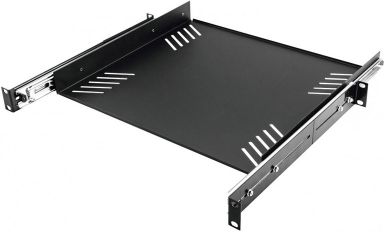
Adam Hall 19" Parts 87556 - 19" Rack Tray 1 U with Drawer Slides
€66.95
*
incl. tax,
plus shipping costs
Availability:
Near-term available
Delivery time: approx. 1 week
Delivery time: approx. 1 week
Delivery time: approx. 1 week

OMNITRONIC Carrier 1/253 black Multistandard Holes
€15.08
*
incl. tax,
plus shipping costs
Availability:
Delivery time: 3-5 days
Delivery time: 3-5 days

Adam Hall 19" Parts 8754 - 19" Rack Tray 1 U
€23.72
*
incl. tax,
plus shipping costs
Availability:
Near-term available
Delivery time: approx. 1 week
Delivery time: approx. 1 week
Delivery time: approx. 1 week

Adam Hall 19" Parts 87552 - 19" Rack Tray 2 U 375 mm depth
€30.71
*
incl. tax,
plus shipping costs
Availability:
Near-term available
Delivery time: approx. 1 week
Delivery time: approx. 1 week
Delivery time: approx. 1 week

Adam Hall 19" Parts 87551 - 19" Rack Tray 1 U 375 mm depth
€24.14
*
incl. tax,
plus shipping costs
Availability:
Near-term available
Delivery time: approx. 1 week
Delivery time: approx. 1 week
Delivery time: approx. 1 week

ACCESSORY Rackbase 1U with ventilation holes
€23.90
*
incl. tax,
plus shipping costs
Availability:
Delivery time: 3-5 days
Delivery time: 3-5 days

SHOWGEAR Shelf for Pro Metal Equipment Rack 1U
€26.90
*
incl. tax,
plus shipping costs
Availability:
Delivery time: 3-5 days
Delivery time: 3-5 days

ACCESSORY Rackbase 2U with ventilation holes
€36.90
*
incl. tax,
plus shipping costs
Availability:
Delivery time: 3-5 days
Delivery time: 3-5 days
27
Articles
No results were found for the filter!

OMNITRONIC Carrier 1U black
OMNITRONIC Carrier 1U black
Carrier plate for racks, 1 U For rack installation of units without rack brackets • Rugged black lacquered steel version • 1 U • For further information about this product, please...
€24.90
*
incl. tax,
plus shipping costs
Availability:
Delivery time: 3-5 days
Delivery time: 3-5 days

IMG STAGELINE RH-100 482 mm (19") mounting plate, 1 RS
IMG STAGELINE RH-100 482 mm (19") mounting plate, 1 RS
482 mm (19") mounting plate, 1 RS Suitable for rack installation of devices incapable of being installed into a rack (e.g. hi-fi components) • Black lacquered steel version • Support...
€30.00
*
incl. tax,
plus shipping costs
Availability:
Delivery time: 3-5 days
Delivery time: 3-5 days

MONACOR RH-210 482 mm (19") mounting plate, 2 RS
MONACOR RH-210 482 mm (19") mounting plate, 2 RS
482 mm (19") mounting plate, 2 RS Suitable for rack installation of devices incapable of being installed into a rack (e.g. hi-fi components) • Version with various mounting holes...
€50.00
*
incl. tax,
plus shipping costs
Availability:
Delivery time: 3-5 days
Delivery time: 3-5 days
SHOWGEAR Shelf for Pro Metal Equipment Rack 1U
SHOWGEAR Shelf for Pro Metal Equipment Rack 1U
: Rack Units: 1 U • Colour: Black • Depth (mm): 420 mm • Height (mm): 43 mm • Width (mm): 455 mm • Flightcase Size: 19" • Material: Steel •
€26.90
*
incl. tax,
plus shipping costs
Availability:
Delivery time: 3-5 days
Delivery time: 3-5 days

MONACOR RH-200 482 mm (19") mounting plate, 2 RS
MONACOR RH-200 482 mm (19") mounting plate, 2 RS
482 mm (19") mounting plate, 2 RS Suitable for rack installation of devices incapable of being installed into a rack (e.g. hi-fi components) • Black lacquered steel version • Support...
€50.00
*
incl. tax,
plus shipping costs
Availability:
Delivery time: 3-5 days
Delivery time: 3-5 days

SHOWGEAR Shelf for Pro Metal Equipment Rack 2U
SHOWGEAR Shelf for Pro Metal Equipment Rack 2U
: Rack Units: 2 U • Colour: Black • Depth (mm): 420 mm • Height (mm): 86 mm • Width (mm): 455 mm • Flightcase Size: 19" • Material: Steel •
€32.89
*
incl. tax,
plus shipping costs
Availability:
Delivery time: 3-5 days
Delivery time: 3-5 days
Adam Hall 19" Parts 8754 - 19" Rack Tray 1 U
Adam Hall 19" Parts 8754 - 19" Rack Tray 1 U
19" Rack Tray 1 U 19" Rack Tray for "non-19" units Universal mounting hole pattern in the base, allows many units to be fitted • Interior dimensions: 440 mm x 248 mm x 44.5...
€23.72
*
incl. tax,
plus shipping costs
Availability:
Near-term available
Delivery time: approx. 1 week
Delivery time: approx. 1 week
Delivery time: approx. 1 week

Adam Hall 19" Parts 8755 - 19" Rack Tray 2 U
Adam Hall 19" Parts 8755 - 19" Rack Tray 2 U
19" Rack Tray 2 U 19" Rack Tray for mounting of non standard equipment The extensive mounting hole pattern in the base greatly reduces the need for drilling. : Product type: 19" Rack...
€26.26
*
incl. tax,
plus shipping costs
Availability:
Near-term available
Delivery time: approx. 1 week
Delivery time: approx. 1 week
Delivery time: approx. 1 week
Adam Hall 19" Parts 87552 - 19" Rack Tray 2 U 375 mm depth
Adam Hall 19" Parts 87552 - 19" Rack Tray 2 U 375 mm depth
19" Rack Tray 2 U 375 mm depth 19" Rack Tray extra deep for mounting non standard equipment with a depth of up to 375 mm Rear edge is folded up 10 mm for extra stability • Internal...
€30.71
*
incl. tax,
plus shipping costs
Availability:
Near-term available
Delivery time: approx. 1 week
Delivery time: approx. 1 week
Delivery time: approx. 1 week

Adam Hall 19" Parts 87555 - 19" Rack Tray 2 U with Drawer Slides
Adam Hall 19" Parts 87555 - 19" Rack Tray 2 U with Drawer Slides
19" Rack Tray 2 U with Drawer Slides 19" Rack Tray 2 U with pull out shelf on drawer slides with a depth of 358 mm • inner height: 73 mm • effective surface (pulled out): 350 mm...
€75.93
*
Availability:
Near-term available
Delivery time: approx. 1 week
Delivery time: approx. 1 week
Delivery time: approx. 1 week
Adam Hall 19" Parts 87556 - 19" Rack Tray 1 U with Drawer Slides
Adam Hall 19" Parts 87556 - 19" Rack Tray 1 U with Drawer Slides
19" Rack Tray 1 U with Drawer Slides 19" Rackmount pull-out tray 1 U. Drawer with slides mounted on both sides with.The rack brackets on the front and back are extendable, allowing the...
€66.95
*
incl. tax,
plus shipping costs
Availability:
Near-term available
Delivery time: approx. 1 week
Delivery time: approx. 1 week
Delivery time: approx. 1 week

Adam Hall 19" Parts 8757 - Rack Tray 2 U
Adam Hall 19" Parts 8757 - Rack Tray 2 U
Rack Tray 2 U 19" Rack Tray for mounting of non-standard equipment With strong, adjustable clampingsteel bars • : Product type: 19" Rack Trays • Material: Steel • Surface:...
€35.63
*
incl. tax,
plus shipping costs
Availability:
Near-term available
Delivery time: approx. 1 week
Delivery time: approx. 1 week
Delivery time: approx. 1 week

Adam Hall 19" Parts 8758 - Rack Tray 3 U
Adam Hall 19" Parts 8758 - Rack Tray 3 U
Rack Tray 3 U 19" Rack Tray for mounting of non-standard equipment With strong, adjustable clampingsteel bars • : Product type: 19" Rack Trays • Material: Steel • Surface:...
€39.53
*
incl. tax,
plus shipping costs
Availability:
Near-term available
Delivery time: approx. 1 week
Delivery time: approx. 1 week
Delivery time: approx. 1 week

Adam Hall 19" Parts 8759 - Rack Tray 4 U
Adam Hall 19" Parts 8759 - Rack Tray 4 U
Rack Tray 4 U 19" Rack Tray for mounting of non-standard equipment With strong, adjustable clampingsteel bars • : Product type: 19" Rack Trays • Material: Steel • Surface:...
€50.82
*
incl. tax,
plus shipping costs
Availability:
Near-term available
Delivery time: approx. 1 week
Delivery time: approx. 1 week
Delivery time: approx. 1 week

Adam Hall 19" Parts 8756 - 19" Rack Tray 2 U with Velcro
Adam Hall 19" Parts 8756 - 19" Rack Tray 2 U with Velcro
19" Rack Tray 2 U with Velcro 19" Rack Tray for top mounting in open top rack. Supplied with self-adhesive Velcro to enable small mixers, effects, etc., to be mounted. Steel, black powder...
€45.18
*
incl. tax,
plus shipping costs
Availability:
Near-term available
Delivery time: approx. 1 week
Delivery time: approx. 1 week
Delivery time: approx. 1 week

ACCESSORY Rackbase 1U extensile
ACCESSORY Rackbase 1U extensile
PENN Hardware • 1 U • Made in Europe • Use of brands: PENN Hardware • Housing design: 1 U • Weight: 2,88 kg •
€79.00
*
Availability:
Delivery time: 3-5 days
Delivery time: 3-5 days

ACCESSORY Rackbase 2U extensile
ACCESSORY Rackbase 2U extensile
PENN Hardware • 2 U • Made in Europe • Use of brands: PENN Hardware • Material: Steel • Color: Black • Housing design: 2 U • Dimensions: Width: 48,30 cm Depth:...
€125.00
*
Availability:
Delivery time: 3-5 days
Delivery time: 3-5 days
OMNITRONIC Carrier 1/253 black Multistandard Holes
OMNITRONIC Carrier 1/253 black Multistandard Holes
Carrier plate for racks, 1 U For rack installation of units without rack brackets • Version with hole pattern • Rugged black lacquered steel version • (19") 48.3 cm rack...
€15.08
*
incl. tax,
plus shipping costs
Availability:
Delivery time: 3-5 days
Delivery time: 3-5 days

SHOWGEAR 19 Inch Mounting Panel for non-19" Equipment 3U
SHOWGEAR 19 Inch Mounting Panel for non-19" Equipment 3U
For non-19" Equipment, 3U : Rack Units: 3 U • Colour: Black • Depth (mm): 300 mm • Height (mm): 133.35 mm • Width (mm): 482.6 mm • Flightcase Size: 19"...
€42.33
*
incl. tax,
plus shipping costs
Availability:
Delivery time: 3-5 days
Delivery time: 3-5 days
Adam Hall 19" Parts 87551 - 19" Rack Tray 1 U 375 mm depth
Adam Hall 19" Parts 87551 - 19" Rack Tray 1 U 375 mm depth
19" Rack Tray 1 U 375 mm depth 19" Rack Tray extra deep for mounting non standard equipment with a depth of up to 375 mm • Rear edges is folded up 10 mm for extra stability...
€24.14
*
incl. tax,
plus shipping costs
Availability:
Near-term available
Delivery time: approx. 1 week
Delivery time: approx. 1 week
Delivery time: approx. 1 week

Adam Hall 19" Parts 87554 - 19" 4 U Rack Tray 375 mm Depth
Adam Hall 19" Parts 87554 - 19" 4 U Rack Tray 375 mm Depth
19" 4 U Rack Tray 375 mm Depth 19" Rack Tray, extra deep, for units with a depth of up to 375 mm Rear edge is raised 10 mm for enhanced stability • Usable interior width: 435 mm...
€34.82
*
incl. tax,
plus shipping costs
Availability:
Near-term available
Delivery time: approx. 1 week
Delivery time: approx. 1 week
Delivery time: approx. 1 week
ACCESSORY Rackbase 1U with ventilation holes
ACCESSORY Rackbase 1U with ventilation holes
(19") 48.3 cm rack installation 1 U • Material: Steel • Color: Black • Mounting depth: 270 mm • Housing design: (19") 48.3 cm rack installation 1 U • Dimensions:...
€23.90
*
incl. tax,
plus shipping costs
Availability:
Delivery time: 3-5 days
Delivery time: 3-5 days
ACCESSORY Rackbase 2U with ventilation holes
ACCESSORY Rackbase 2U with ventilation holes
(19") 48.3 cm rack installation 2 U • Color: Black • Housing design: (19") 48.3 cm rack installation 2 U • Dimensions: Width: 48,30 cm Depth: 36,80 cm • Weight: 1,85...
€36.90
*
incl. tax,
plus shipping costs
Availability:
Delivery time: 3-5 days
Delivery time: 3-5 days

OMNITRONIC Rackbase 1U extensile
OMNITRONIC Rackbase 1U extensile
(19") 48.3 cm rack installation 1 U • Color: Black • Housing design: (19") 48.3 cm rack installation 1 U • Dimensions: Depth: 38 cm Height: 4,4 cm • Weight: 2,53 kg...
€39.90
*
incl. tax,
plus shipping costs
Availability:
Delivery time: 3-5 days
Delivery time: 3-5 days